
What makes a great motion designer in 2026


So, what really separates a good motion designer from a truly great one? And how is the role itself shifting right in front of our eyes?
It boils down to a powerful combination of artistic talent, technical mastery, and a sharp business mind. Forget the old idea of a heads-down animator just taking orders. Today’s elite motion designers are visual storytellers who get the big picture—they understand marketing goals and can turn complex brand messages into motion that grabs you.
The Anatomy of a Modern Motion Designer

The very best in this field live at the intersection of creativity and commerce. They aren't just making pretty animations; they're crafting strategic assets designed to solve real business problems.
Think of it like a master chef. They don't just cook food. They combine ingredients with incredible precision to create an unforgettable experience that keeps customers coming back. A great motion designer does the same, blending their skills to drive engagement and deliver measurable results.
This requires a unique mix of qualities that go way beyond just being good with software like After Effects. The most valuable pros are true collaborators who can take a creative brief, internalize the goal, offer smart feedback, and then execute that vision perfectly.
Core Qualities That Set Great Designers Apart
To really get it, let's break down the essential traits. We'll dive deeper into each of these, but for now, think of this as the blueprint for excellence.
- Artistic Vision and Creativity: This is the foundation. They have a deep understanding of design principles—color theory, typography, composition, and timing—to create visuals that are not only beautiful but also make you feel something.
- Technical Proficiency: Knowing the industry-standard software is table stakes. But the best designers are also lifelong learners, constantly picking up new tools and refining their techniques. You can see how these skills apply across different formats in our guide to the types of motion graphics.
- Strategic Problem-Solving: They don't just see a task; they see a challenge. They can look at a business goal—like boosting sign-ups or explaining a complex product—and design a motion-based solution that actually works.
- Collaborative Mindset: Top designers are team players. They work effortlessly with marketers, copywriters, and other stakeholders to make sure the final piece is perfectly aligned with the brand’s message and goals.
A truly great motion designer doesn't just animate what they're told. They understand the why behind the request, acting as a strategic consultant who uses motion to build brand equity and drive business growth.
To bring this all together, here’s a quick summary of what these core qualities look like in action and why they're so crucial for your business.
Core Traits of an Elite Motion Designer
Ultimately, finding a motion designer with this blend of skills means you’re not just hiring an animator—you’re bringing on a strategic partner who can elevate your brand's story.
Mastering the Essential Creative and Technical Toolkit
Great motion design is a marriage of two things: raw creative talent and serious technical chops. It's easy to get bogged down in a long list of software, but what really separates the pros is how they use those tools to get real business results. We're talking about making a social media video that actually stops the scroll, or a product demo that makes a complicated feature suddenly feel simple and intuitive.
Think of it like this: technical skill is the engine in a high-performance car. It gives you the power to go fast. But creative mastery—that deep understanding of typography, color theory, and pacing—is the GPS and the driver combined. It ensures the car not only moves but gets to the right destination, hitting its strategic goals and connecting with the audience along the way.
The Core Software Arsenal
While it's true that the tools don't make the artist, a professional's software lineup is a pretty clear signal of what they can do. The industry really revolves around a handful of key programs, each with a specific job in the animation pipeline.
- Adobe After Effects: This is the undisputed workhorse for 2D animation, visual effects (VFX), and putting all the pieces together. A top-tier designer uses it to bring static graphics to life, build slick title sequences, and weave special effects into live-action footage so seamlessly you don't even notice.
- Cinema 4D: When a project needs to pop into the third dimension, Cinema 4D is often the go-to. It's known for being more user-friendly than some of its counterparts, making it a favorite for creating 3D models, animating product mockups, and generating those abstract motion pieces with real depth and texture.
- Adobe Illustrator & Photoshop: Great motion design rarely begins inside an animation program. The best designers are absolute wizards in these two, using them to craft the vector assets, storyboards, and style frames that serve as the visual blueprint for the entire project.
Of course, it doesn't stop there. Being skilled with complementary video editing software is also a must for assembling the final cut, adding sound design, and making sure the final delivery is perfectly polished. You can dive deeper into those options in our guide to the best video editing software on the market.
Beyond the Buttons: Timeless Creative Principles
Knowing which buttons to click is one thing. Knowing why you're making specific creative choices is what elevates a designer from good to great. These timeless principles are what give motion graphics their punch and emotional weight, and the best in the business have an almost intuitive command of them.
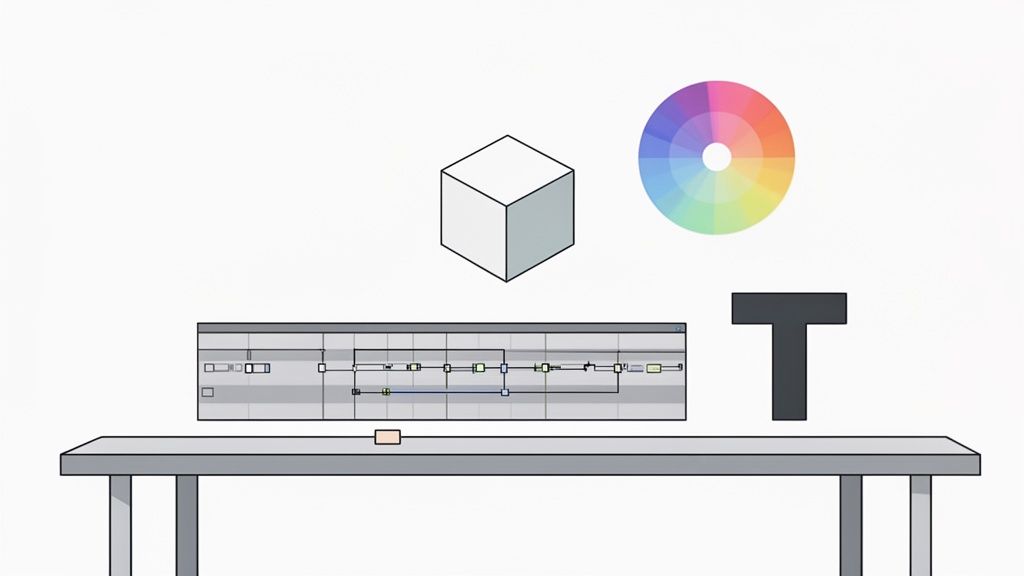
Getting comfortable with a complex interface like After Effects is just the first step. The real magic happens when a designer applies creative theory to every single keyframe and transition.
Pacing and Timing: This is the heartbeat of an animation. An experienced designer knows exactly when to make things fast and punchy to build excitement, or when to slow things down to create tension or highlight something important. It’s the invisible hand guiding the viewer's emotional journey.
Mastering this blend of creative and technical skills is a big deal, and it's highly valued. In the motion design world, being fluent in tools like After Effects and Cinema 4D is a baseline for success, and top earners are compensated accordingly. High-end motion designers—those with a killer portfolio and years of experience—can pull in salaries between $89,500 and $107,000 annually.
This isn't just a random number; it's a reflection of the huge demand for professionals who can expertly mix 2D and 3D animation, dynamic typography, and VFX to create visuals that genuinely move the needle on brand engagement. This financial reality makes it crystal clear just how vital this role has become for any modern business.
Thinking Beyond Pixels With a Strategic Mindset
Technical chops and a good eye are just the price of entry. They get a motion designer in the door, but they don't define greatness. A truly exceptional motion designer isn't just an order-taker waiting for instructions; they're a strategic partner who thinks critically about your business goals and actively works to push them forward.
This is the real difference between someone who can animate a logo and a designer who can build a motion identity that drives brand recognition and customer action. The best designers know that every keyframe and transition has to serve a purpose far greater than just looking cool.
They operate more like an architect than a freelance artist. An architect doesn't just sketch a beautiful building; they consider how people will live and work inside it, the flow of traffic, and how the structure fits into its environment. A strategic motion designer brings that same holistic thinking to your brand.
Communication is a Superpower
The most valuable motion designers are phenomenal communicators. They have a knack for listening intently, asking insightful questions, and turning abstract business goals into tangible visual concepts. Honestly, this soft skill is just as crucial as their mastery of After Effects.
When you give them a new project, they don't just jump into animating. They dig in to understand the why behind the request.
- Who are we actually trying to reach with this video?
- What's the single most important thing we need them to walk away with?
- Where will this be seen—on a loud trade show floor or a quiet social media feed?
- What do we want the viewer to do after watching?
This initial conversation is everything. It ensures everyone is on the same page from day one, which saves a ton of headaches and costly revisions down the line. It's how they internalize the project's core message—the first step to creating something truly effective. To make this process even smoother, it helps to have a solid plan. Check out our creative brief template to see how clear communication really sets the stage for success.
A great designer isn't afraid to challenge an idea if they see a better way to hit the goal. They offer constructive feedback that makes the project better, acting as a true creative consultant, not just a pair of hired hands.
Their communication skills also shine when working with other teams. They can speak the language of marketers, product managers, and copywriters, making sure the motion design fits perfectly within the larger campaign and brand voice.
Proactive Problem-Solving Prowess
Motion design is almost never a straight line. Projects are messy and full of surprises, from technical glitches and endless rendering errors to last-minute feedback that throws a wrench in the whole plan. A good designer might get stuck when these things happen. A great one thrives on solving them.
They are, by nature, proactive. Instead of waiting for a problem to blow up a deadline, they see potential roadblocks from a mile away and start thinking about workarounds.
This problem-solving mindset is invaluable. For instance, if a specific visual effect is eating up too much time and threatening the budget, a strategic designer will proactively suggest a different approach that delivers a similar impact without derailing the timeline. They don't just point out problems; they bring solutions to the table. This is what separates the best from the rest and shows how the role is changing—from pure execution to strategic partnership.
This quality turns them from a simple service provider into an indispensable part of the team. You can trust them to handle the project's complexities, manage their time like a pro, and deliver a polished final product—on time and on budget—even when things don't go exactly as planned.
How AI Is Redefining the Motion Design Landscape
AI is probably the biggest shake-up in the creative world since we all switched from analog to digital. But for a truly great motion designer, AI isn't a threat—it's a force multiplier. It’s not here to take jobs; it’s here to be a powerful co-pilot.
The whole point is to automate the tedious, soul-crushing tasks and speed up the creative process. This gives designers their time back, letting them focus on what actually matters: strategy, storytelling, and nailing the core concept.
The job description is changing right before our eyes. The motion designer is shifting from a solo artist, meticulously crafting every single frame, into more of a creative director orchestrating a suite of intelligent tools. This lets them explore way more ideas, faster than ever before.
To really get a feel for how AI is reshaping the field, it's worth checking out the latest AI video editing tools that are quickly becoming standard in the workflow. Platforms like Runway ML and Adobe Firefly aren't just cool experiments anymore; they're essential parts of the modern creative toolkit.
Supercharging the Creative Workflow
Think of a motion designer’s time like a budget. Historically, a massive chunk of that budget was spent on repetitive, manual work—things like rotoscoping (cutting out objects frame-by-painstaking-frame) or creating endless versions of one design element. AI just eats that grunt work for breakfast.
And that's where the magic happens. Instead of burning hours on technical execution, a designer can pour that energy into creative brainstorming and direction.
Here’s how AI is already being used in the real world:
- Automating Tedious Tasks: Tools can now handle complex rotoscoping or background removal in minutes, not days. This frees up designers to think about composition and movement.
- Rapid Style Frame Generation: You can feed AI a simple text prompt and get back dozens of unique style frames. This helps designers and clients get on the same page visually, right from the start.
- Accelerated Storyboarding: AI can generate initial storyboard concepts almost instantly, giving a project a visual starting point for the narrative. It’s a great way to kickstart brainstorming and get ideas flowing.
Platforms like RunwayML offer a peek into this new reality, where a simple text prompt can generate entire video clips or apply complex effects with a click. We're witnessing a fundamental change in how motion content gets made, moving from manual labor to intelligent collaboration.
From Executor to Creative Director
This new way of working elevates the role of the motion designer. They're no longer just the hands building the animation; they're the mind directing the entire creative vision, using AI as an extension of their imagination. The foundational skills of a great designer—a sharp eye for composition, a gut feeling for pacing, and a mastery of storytelling—are now more important than ever.
AI can generate pixels, but it can’t cook up a compelling story or understand a brand’s business goals. That’s still our job. The fear that AI will replace artists is everywhere, and for a deeper dive, our article on if AI will replace animators offers some much-needed context.
The most successful motion designers of tomorrow will be the ones who master the art of prompting, curating, and refining what AI generates. Their value won't be in clicking the right buttons, but in their taste, vision, and strategic thinking.
Ultimately, this is all about working smarter and expanding our creative horizons. By handing off the repetitive tasks to machines, designers are freed up to do what they do best: solve problems, tell stories, and create visuals that actually connect with people. This isn’t the end of the motion designer; it’s the beginning of a more strategic, impactful, and creatively fulfilling version of the role.
Exploring New Models for Creative Collaboration
The old 9-to-5, in-house creative role is starting to feel like a relic. The entire industry is moving toward more fluid ways of working, from globally distributed remote teams to specialized freelance collectives. This isn't just a trend; it's a fundamental shift that’s changing how we think about creative projects and team dynamics.
This evolution isn't just about where people clock in. It’s about how businesses find and work with creative talent. The traditional hiring process—with its endless searches, interviews, and onboarding—is often just too slow and clunky for companies that need to stay agile. You need a way to bring in world-class talent without the heavy commitment and overhead.
This demand for speed and flexibility has paved the way for some really smart new approaches. One of the most powerful is the subscription-based creative infrastructure, a model that gives businesses on-demand access to a full suite of vetted talent.
The Rise of Creative Subscriptions
What if you could have an entire creative department—motion designers, graphic artists, project managers, you name it—ready to jump on your projects in minutes? That's the simple idea behind a creative subscription. It works like a SaaS product but for creative services, giving you unlimited access to top talent for a predictable monthly fee.
This model is a huge win for marketing leaders and founders. Instead of spending months hunting for the right freelancer or full-time hire, they can plug directly into a pre-vetted, high-performing team. It cuts out all the friction of sourcing, negotiating, and managing individual creatives, so your team can get back to focusing on strategy and growth.
For motion design, this is especially valuable. Finding a top-tier motion designer who gets both the creative vision and the business strategy is a tough ask. A subscription service does that heavy lifting for you, connecting you with a roster of pros who are ready to go.
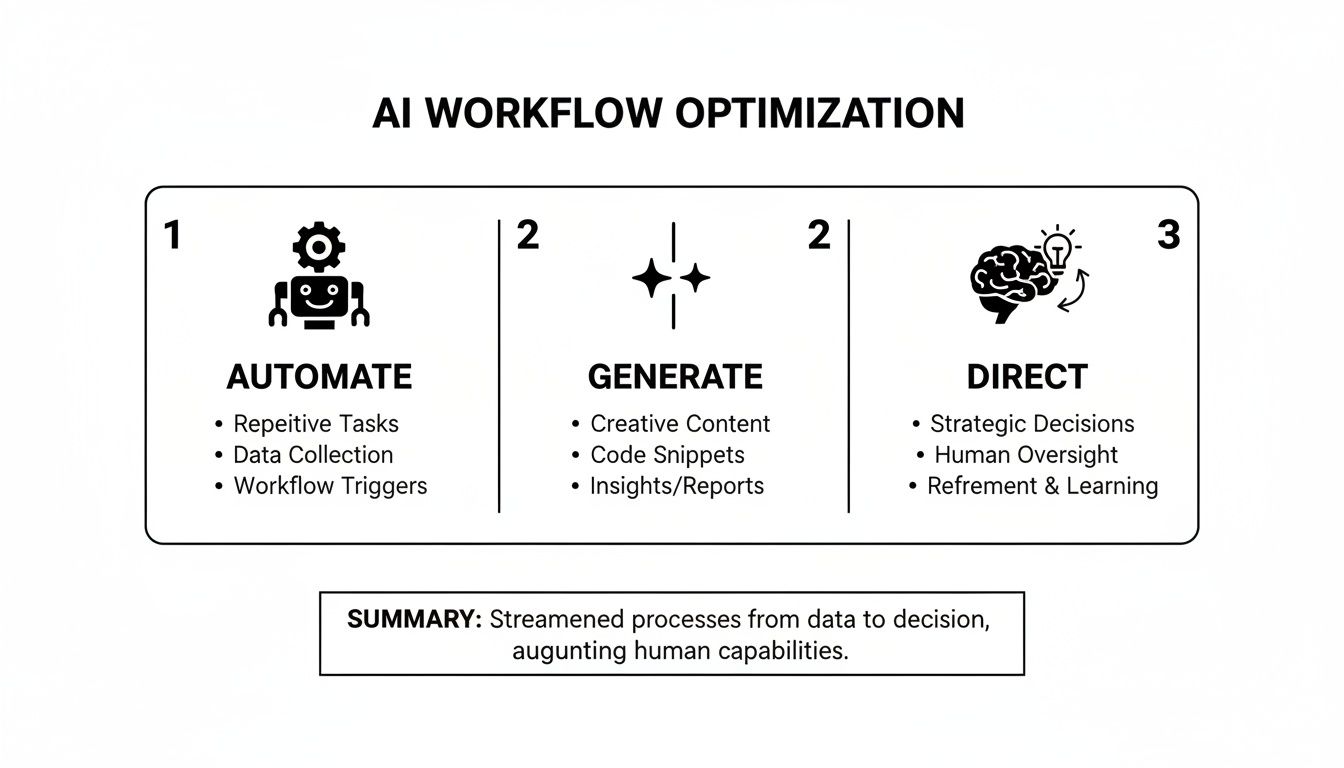
A subscription-based creative infrastructure is like an operating system for your brand's creative work. It provides the talent, tools, and processes you need to produce incredible content consistently, and you can scale it up or down whenever you need.
This model brings a new level of predictability to what’s often a chaotic process. By standardizing workflows and communication, it ensures every project gets the same expert attention, whether it's a quick social media clip or a major brand video. In fact, effective project management for creatives is baked right into the service.
Comparing Creative Team Models
To really see the difference, let's break down the old ways of building creative teams versus the new. Each model comes with its own set of trade-offs in hiring, cost, and the ability to scale.
The subscription model essentially separates your creative capacity from your headcount, offering a much more resilient and adaptable way to get great work done.
Embracing an Agile Future
At the end of the day, what makes a great motion designer is changing right alongside how they’re hired and brought into a team. The future belongs to models that prioritize flexibility, efficiency, and access to elite talent without all the traditional baggage. A subscription infrastructure gives businesses the creative firepower they need to stay ahead, compete, and win.
How to Find and Empower a Great Motion Designer

For founders and marketing leaders, trying to lock down top-tier creative talent can feel like navigating a minefield. The right motion designer is a game-changer for your brand, but finding them means looking past the flashy showreels. Don't get dazzled by complex effects; what you really need to see is evidence of strategic thinking and powerful storytelling.
A truly great designer’s portfolio is a collection of solutions, not just a highlight reel of animations. You should be looking for work that clearly nails a message, feels true to a brand’s identity, and solves a real business problem. That’s the stuff that shows they get what it really means to be a great motion designer in a business setting. It’s about results, not just art.
What to Look for in a Portfolio
As you're sifting through a candidate's work, ask yourself these questions to cut through the noise and find someone with real strategic depth:
- Does the motion have a purpose? Every single animation, transition, and effect should be working to guide the viewer’s eye and hammer home the core message. Anything else is just a distraction.
- Is there brand consistency? Look for proof that they can adapt their style to different brand guidelines. You need someone who can work within your visual system, not just their own.
- Can they actually tell a story? Even a quick, 15-second social media clip needs a beginning, a middle, and an end. It has to lead the viewer somewhere, whether that's to a conclusion or a call to action.
A portfolio that ticks these boxes belongs to a strategic partner, not just a button-pusher. This is someone who has the skills to turn your marketing goals into visual narratives that get people to pay attention and deliver a real return.
Creating a Partnership for Success
Once you’ve found the right person, your job shifts to empowering them. Collaboration is a two-way street; your input is just as critical as their creative execution. And it all starts with a rock-solid creative brief that leaves no room for guesswork.
A strong brief is the project's North Star. It needs to lay out the goals, target audience, key messages, and all the tech specs. Getting this clarity upfront saves everyone from painful misunderstandings and endless revision cycles down the road. And when you give feedback, be specific and helpful. Instead of a vague, “I don’t like it,” explain why it’s not hitting the mark and tie it back to the original brief.
The best creative partnerships are built on a foundation of clear communication and mutual respect. When you treat your motion designer like the strategic expert they are, you unlock their full potential and end up with work that blows your expectations out of the water.
This whole process—finding talent, vetting them, briefing, and managing projects—eats up a ton of time and resources. For teams that are already stretched thin, the old-school hiring or freelance model creates friction that can completely kill your momentum. This is exactly where a different approach, like a creative subscription, really shines.
By working with a platform like Moonb, you get to sidestep all the hiring headaches. You get instant access to a pre-vetted team of top-notch motion designers and a ready-made infrastructure for seamless collaboration. This model delivers consistent, high-quality creative work without the administrative weight, freeing you up to focus on strategy while the experts nail the execution.
Frequently Asked Questions About Motion Design
Jumping into the world of motion design can kick up a lot of questions, especially for leaders trying to weave this powerful tool into their marketing. We get it. Here are some straightforward answers to the most common queries we hear from founders and marketing teams.
Our goal is to pull back the curtain on the role and help you understand how to use motion design to really move the needle on business growth.
What Is the Difference Between a Motion Designer and an Animator?
Here's a simple way to think about it: all motion designers are animators, but not all animators are motion designers. Animation is the big-picture craft of bringing things to life, whether it's a character in a movie or a cartoon series. It's often focused on narrative storytelling and performance.
Motion design, however, is a specific discipline that lives inside the world of animation. It's all about making graphic design elements move—animating typography, logos, icons, and data visualizations to communicate an idea for a brand. It’s design-led and almost always has a strategic business or marketing goal behind it.
How Long Does a Typical Motion Design Project Take?
Ah, the classic "it depends" question. But we can give you a better breakdown than that. A project's timeline really comes down to three main things:
- Complexity: A simple animated logo might only take a few days. A detailed 2-minute explainer video with custom characters and multiple scenes? You're likely looking at several weeks.
- Length: This one's pretty direct. A punchy 15-second social ad is a much quicker project than a 90-second brand story. More screen time means more production time.
- Feedback and Revisions: The back-and-forth is a huge factor. A project can fly or crawl depending on how many review cycles there are and how clear the feedback is.
A well-defined creative brief and a streamlined feedback process are the two most powerful tools for keeping a motion design project on schedule and on budget.
What Should I Look for When Hiring a Motion Designer?
You've got to look past the flashy effects reel. A truly great motion designer’s portfolio shows strong storytelling, a rock-solid understanding of design fundamentals (like typography, color, and composition), and an ability to adapt their style to fit different brands.
When you're hiring, a huge first step is crafting effective job descriptions that call out these strategic skills. Above all, you're not just looking for someone who makes pretty pictures; you're looking for a creative problem-solver who thinks about your business goals first.
At Moonb, we eliminate the guesswork. Our subscription model gives you instant access to a full team of vetted, top-tier motion designers who are ready to integrate into your workflow and start delivering strategic creative assets from day one. Discover how Moonb can scale your creative output.