13 Top Video Content Agency Choices for 2026
Looking for a video content agency? We review 13 top partners for marketing, corporate, and social video to help you find the right fit for your team.

I have sat on the buying side and the delivery side of this decision for years, and the pattern rarely changes. A team needs more video than it can make, campaigns are stacking up, prospects want to see the product in action, and every channel is asking for fresh creative. It sounds simple until you try to make good video consistently across launch work, social clips, explainers, internal updates, and paid ads.
That is where a video content agency or creative partner comes in. A good one handles scripting, production, editing, motion graphics, versioning, and delivery, and you barely feel the load. A bad fit creates a different problem, because you end up with nice-looking work that arrives late, misses the brief, or feels disconnected from the rest of your brand.
The bigger decision is the operating model, and it deserves more thought than the shortlist of names. A traditional agency can be strong for a flagship campaign, while a freelancer helps with one narrow skill. An in-house team gives you control, though hiring takes months you may not have, and a dedicated creative team sits in the middle, with steady output, shared context, and fewer handoffs.
That distinction matters because the demand for video keeps climbing. If you are sorting through options right now, my advice is to start with the model and then pick the provider, since that is the fastest way to avoid buying the wrong kind of help.
If you are also comparing broader marketing partners, Polaris Marketing Solutions’ guide to choosing a digital marketing agency is a useful companion read.
1. Moonb
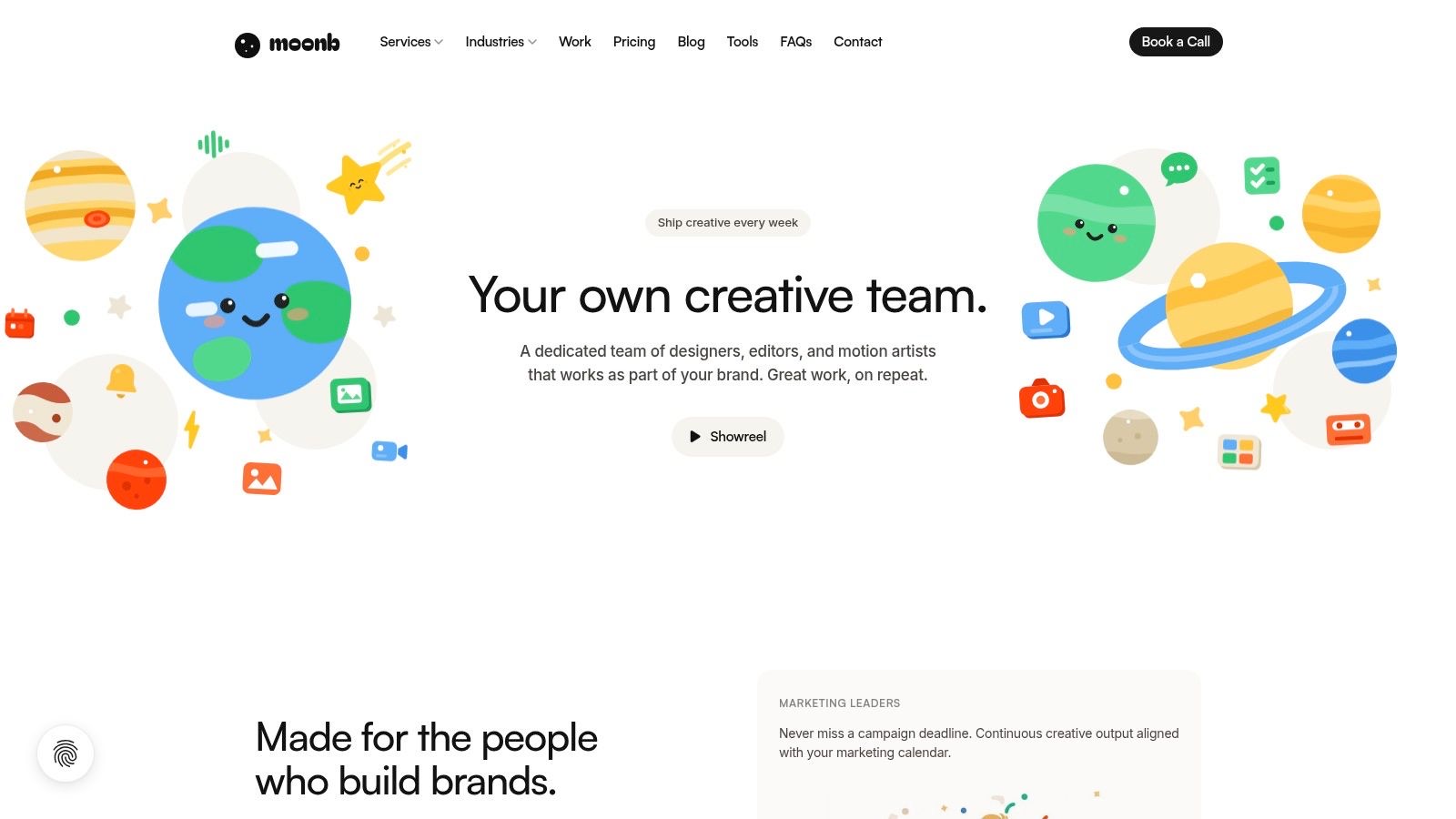
Moonb is the first option I would put in front of a B2B marketing leader who needs output every week, not just a one-time film. It is a creative partner led by senior creative directors, producing video, motion design, and design for marketing teams. The fit is strongest when your internal team already knows what it needs but does not have the hands to keep up.
What stands out is the operating model. Moonb works as a dedicated creative team that learns your brand and keeps producing on a steady weekly rhythm, which is different from hiring a shop for one launch video and then starting over with new people for the next campaign.
Pros and cons
- Dedicated team ownership: One team holds the brand context, which helps with consistency across product marketing, social, internal, and paid work.
- Steady weekly output: The model is built for ongoing delivery, with fast turnarounds on most requests.
- Broad scope: Video, motion, animation, and design can sit in one workflow instead of being split across separate vendors.
- Operational clarity: Shared workspace and real-time tracking make it easier to see what’s moving and what’s blocked.
- Regulated-sector readiness: Compliance-ready workflows, full IP transfer, and multi-brand support matter for fintech and healthcare teams.
The trade-off is simple.
- Custom pricing: You need to discuss scope directly with the team.
- Best for ongoing needs: If you only need one hero video this year, a dedicated team may be more than you need.
Website: Moonb
2. Sandwich
Sandwich has a very recognizable style. If you’ve seen product launch films that feel witty, dry, and unusually watchable for tech, there’s a good chance Sandwich is part of the mental reference set. They’re a Los Angeles creative studio known for product-first commercials and brand films that make software feel human.
That specialty is both the appeal and the filter. If your company wants a memorable launch piece, a polished campaign film, or a product spot with a strong point of view, Sandwich is a serious contender. If your brand voice is formal, compliance-heavy, or executive, the tone may need careful alignment.
What they do well
Sandwich is strong when the brief needs concepting, writing, production, and post all under one roof. They’ve built a reputation around turning product stories into ads people want to watch. That matters for launches where you need more than a screen recording with music.
Their style also fits brands that want distinctiveness over volume. You’re usually hiring Sandwich for a crafted campaign asset, not for a constant stream of social versions every week. That’s the classic project-agency trade-off. You get strong creative identity, but usually with timelines and costs that make more sense for higher-stakes work.
Good product marketing video doesn’t just explain the interface. It makes the buyer care before the demo starts.
Pros and cons
- Distinctive creative voice: Their comedic, product-focused style can make a brand stand out in a crowded category.
- Full-service production: Useful for online campaigns and broadcast-quality work.
- Tech product fluency: Strong fit for software launches and startup storytelling.
- Credible track record: They’re widely known and have worked across startup and large-brand contexts.
The downsides are the usual ones for a premium studio.
- Better for major projects: This isn’t the first choice for teams that need ongoing weekly volume.
- Style fit matters: The humor-forward tone won’t work for every brand or category.
- Pricing: Custom pricing.
Website: Sandwich
3. Spear Growth
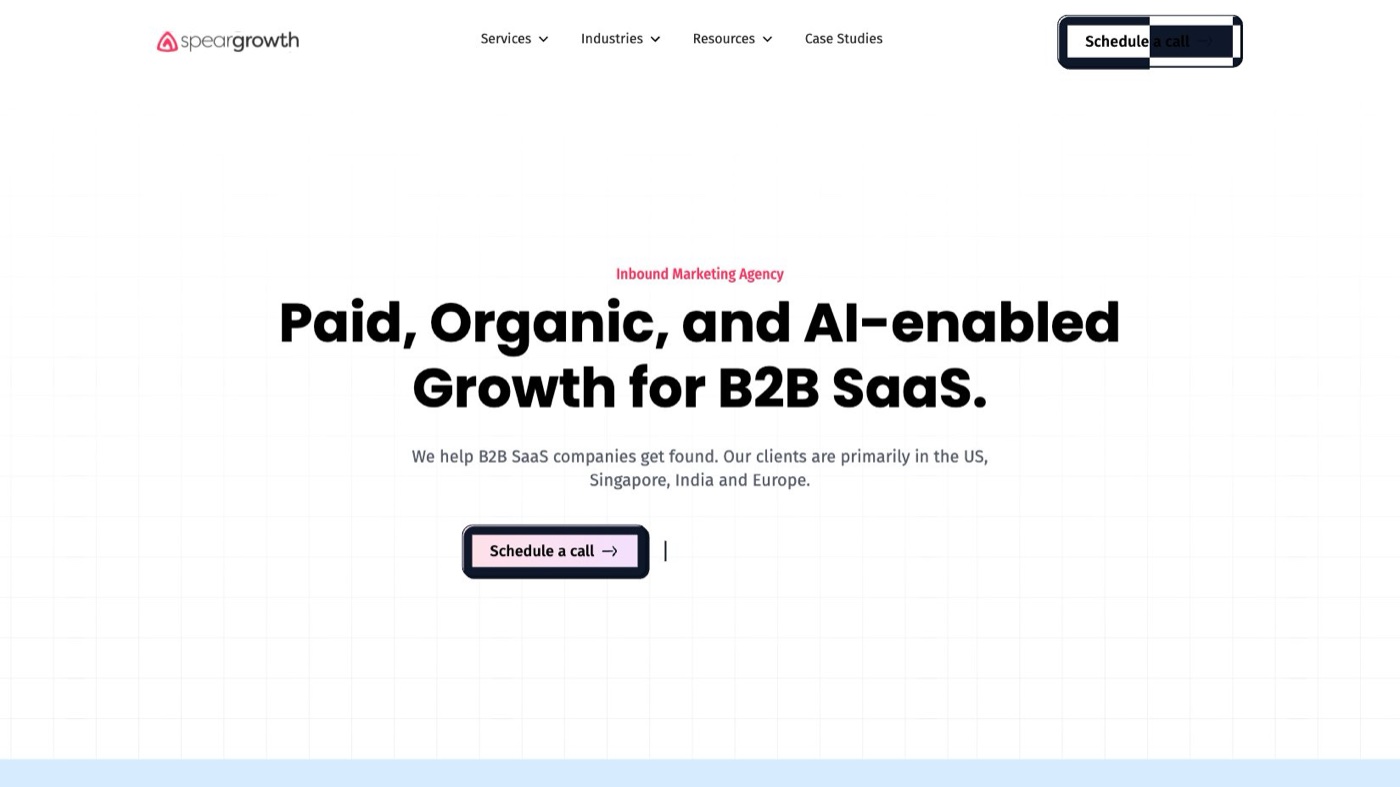
Spear Growth is a different animal from the studios on this list, and that is the point of including it. It is an AI video agency for B2B SaaS teams that sells videos one at a time, from $300 per video, with turnaround around five business days. Scripting, animation, and voiceover are all handled for you, and the scripts come from marketers who spend their days inside SaaS funnels rather than film treatments.
The trade-off is scope. Everything is AI-enhanced animation and voiceover, so live-action, broadcast, and crewed launch films are out of their range. The fit is a sales or marketing team that needs a demo video this month on a three-figure budget.
What they do well
The per-video model removes most of the friction that keeps small teams from starting. There is no retainer and no onboarding program: you brief a video and get it back within the week, with five revision rounds and a shared Slack channel included. They hold a 4.9 rating on Clutch across 17 reviews, decent third-party evidence for a newer service.
Pros and cons
- Per-video pricing: From $300 per video with no retainer, easy to trial.
- Fast turnaround: About five business days per video.
- SaaS-native scripting: Writers who understand B2B buyer objections.
- Structured revisions: Five rounds plus Slack collaboration on every project.
The limits are worth knowing.
- Animation only: No live-action or broadcast production.
- Newer video offer: The video service is younger than their marketing work, so ask for samples in your category.
- Pricing: From $300 per video.
Website: Spear Growth
4. Demo Duck
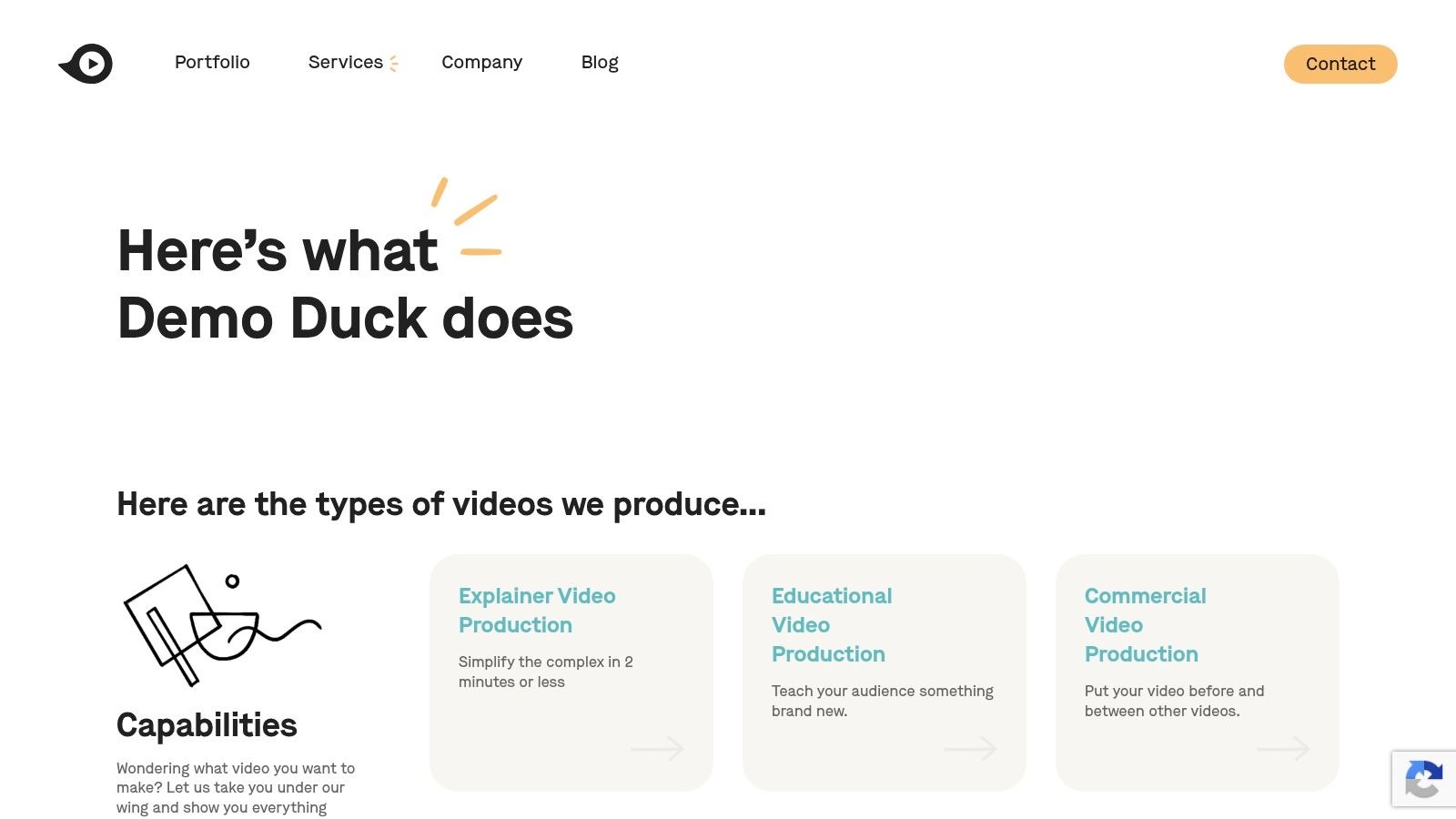
Demo Duck sits in a useful middle ground. They’re known for explainer videos, testimonials, branded content, internal communications, and educational work. For teams that need a mix of external and internal content, that breadth can be more helpful than a narrow ad-only studio.
I like Demo Duck most for companies with complex products or messages that need simplification. That often includes SaaS, healthcare, education, and nonprofit teams. Their work tends to focus on clarity first, which is the right instinct for a lot of B2B video.
Best use case
If your team needs a smart explainer, a customer story, and an internal rollout video in the same quarter, Demo Duck is built for that kind of spread. They’re an end-to-end studio, so scripting through post-production can stay in one place. That lowers coordination work for lean marketing teams.
If you’re still shaping what your explainer should cover, Moonb’s article on company explainer videos is a practical reference.
Pros and cons
- Versatile format mix: Helpful for marketing, customer stories, educational videos, and internal comms.
- Strong at simplification: A good fit for dense products and category education.
- Cross-industry experience: Useful if you want a studio that’s seen different buyer contexts.
- End-to-end service: Less need to split scripting, production, and editing across vendors.
There are limits.
- Project-based model: It’s less suited to rapid weekly output unless you set up a broader ongoing arrangement.
- Pricing: Custom pricing.
Website: Demo Duck services
5. Epipheo
Epipheo has been associated with explainers for a long time, but their differentiator is their storytelling lens. They focus on the core idea behind a product or company, the insight that makes the offer click. That makes them a good choice when your team knows the feature list but hasn’t yet found the cleanest story.
This is often where a lot of video content agency options miss. They can produce attractive work, but they don’t always sharpen the message enough before production starts. Epipheo tends to lead with narrative strategy.
Why teams choose them
They offer animated, live-action, and documentary-style formats, so you’re not locked into one visual approach. That helps when the same company needs a brand film for one campaign and a sharper product explainer for another. They also offer retainer arrangements, which gives them more flexibility than studios that only work project to project.
There is a strategic point underneath this. Plenty of providers can produce attractive work but never sharpen the message, and The Drum’s coverage of keeping up with video content demand captures the operational side of the same problem: brands usually need a repeatable cadence, not one polished asset every few months.
For teams exploring animated directions, Moonb’s guide on how to make a cartoon is a practical companion.
Buyer note: Ask who is responsible for finding the core message. If the answer is “the client,” you may get a well-produced video that still does not connect.
Pros and cons
- Strategy-led storytelling: Strong fit for complex products that need a clear “why this matters” story.
- Format flexibility: Animated, live-action, and documentary-style options.
- Recurring model available: Helpful if you want an ongoing series rather than isolated projects.
The main trade-offs are straightforward.
- Premium positioning: Best suited to teams willing to invest in crafted narrative work.
- Pricing: Custom pricing.
Website: Epipheo
6. Vidico
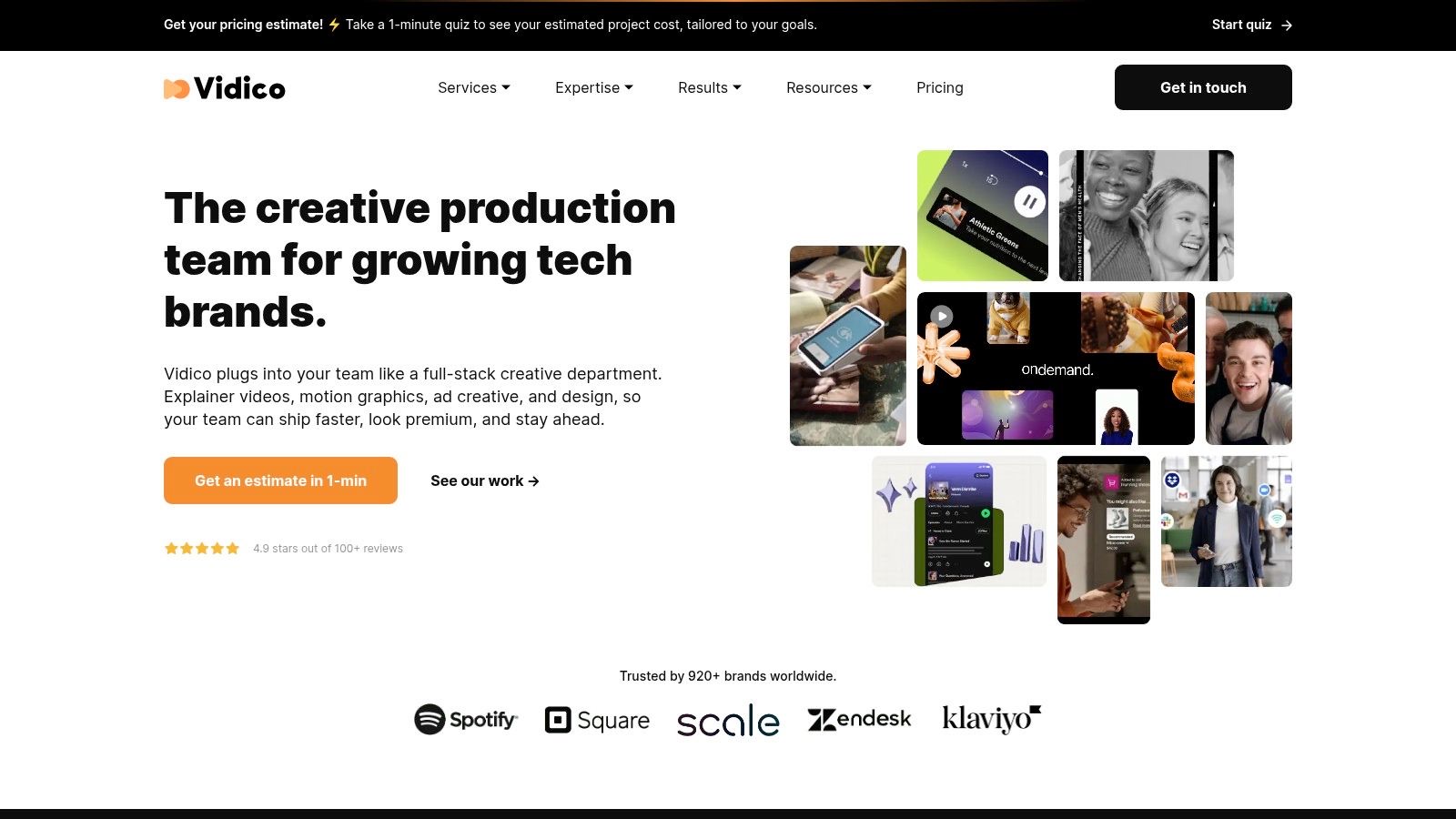
Vidico is one of the clearest B2B and SaaS-focused names in this group. Their work spans animated explainers, live-action demos, onboarding content, paid ads, and broader product marketing assets. If your buyers are evaluating software, infrastructure, cybersecurity, fintech, or healthcare products, Vidico’s portfolio tends to feel close to home.
That category fit matters more than many teams think. A provider that understands product marketing for technical buyers usually writes tighter scripts, shows the right product moments, and wastes less time trying to make B2B sound like consumer lifestyle advertising.
Where Vidico is strongest
Vidico is a good option when you need a mix of performance creative and product education. That combination is important for SaaS teams because the same quarter can include a paid acquisition push, an onboarding refresh, and launch content for a new feature. Their model covers that spread better than a pure commercial studio.
The broader market is also moving in their direction. More channels, more formats, and more volume usually favor partners that can handle both education and performance.
If you’re cost planning for animation versus live action, Moonb’s breakdown of video production cost helps frame the trade-offs.
Pros and cons
- B2B buyer journey fit: Strong alignment with SaaS and enterprise product marketing needs.
- Channel range: Useful for ads, demos, onboarding, and explainers.
- Technical category experience: Helpful for fintech, cybersecurity, healthcare, and similar sectors.
- Animated and live-action capability: Gives teams format flexibility without changing vendors.
A few things to watch.
- Pricing: Custom pricing, usually tied to scope, length, and style.
- Global coordination: If you need on-site US shoots, planning may take more coordination depending on the project.
Website: Vidico
7. Indigo Productions
Indigo Productions is the most traditional production company on this list, and that’s exactly why some teams should shortlist them. If you need executive communication, town halls, investor-facing video, live streaming, motion graphics, or a polished corporate film, Indigo fits that lane well.
A lot of companies don’t need a quirky brand film. They need a production partner who can organize shoots, handle talent, manage motion graphics, and make senior leadership comfortable on camera. Indigo’s offer is built around that reality.
Best fit for corporate and broadcast-style work
They cover concepting, scripting, casting, multi-camera shoots, visual effects, and finishing. They also support live streaming and event production, which makes them practical for companies with recurring internal and external communications needs. Financial services, healthcare, and education teams often need that mix of polish and process.
This is also where a classic project-based video content agency can still be the right answer. If the work is high-stakes, logistics-heavy, and episodic, you may want a crewed production company instead of a weekly creative team. The trade-off is speed and throughput. You usually won’t use this model for constant social output.
Pros and cons
- Strong corporate fit: Good for executive messages, internal comms, and polished brand films.
- Complex logistics support: Useful for shoots, casting, events, and live streaming.
- Broad city coverage: Practical for larger organizations operating beyond one market.
- One-stop production capability: Helpful when a project needs many moving parts under one roof.
The trade-offs are familiar.
- Traditional project model: Less suitable for fast weekly creative volume.
- Higher-end production posture: Often better matched to larger-spend work.
- Pricing: Custom pricing.
Website: Indigo Productions
8. Shootsta
Shootsta is the most operations-focused option in this lineup. Their model is built for teams that need recurring output, distributed workflows, and fast editing support. Instead of behaving like a classic boutique studio, they’re designed for scale, especially across internal communications, repeatable social content, and ongoing series work.
That makes Shootsta useful for larger teams in multiple regions. If your company needs a repeatable way to create videos from offices, field teams, or leaders in different markets, their template-led workflow can be appealing.
Why the model matters
Shootsta uses a credits-based structure with production support and fast delivery. The strength here is repeatability. Teams that make a lot of recurring video often care less about one-off cinematic treatment and more about dependable throughput, brand control, and turnaround time.
That operating model lines up with where demand is heading, as more teams adopt AI-assisted editing and cloud collaboration to hit the fast turnarounds clients now expect.
For teams focused on recurring social output, Moonb’s guide to short-form video is a useful planning read, and the roundup of the best short-form video agencies covers who actually makes it.
Fast workflows are only useful if the output still feels like your brand. Ask to see versioning, template use, and review flow, not just finished hero reels.
Pros and cons
- Built for ongoing cadence: Strong fit for teams creating repeatable content at volume.
- Fast delivery workflows: Useful when internal comms and social timelines move quickly.
- Template and brand control: Helpful for consistency across regions and teams.
- Global operator access: Useful when shoots happen across different markets.
The trade-offs depend on your creative needs.
- Best for repeatable formats: Highly conceptual films may need separate creative development.
- Pricing: Custom pricing based on credits and support level.
Website: Shootsta
9. Lemonlight
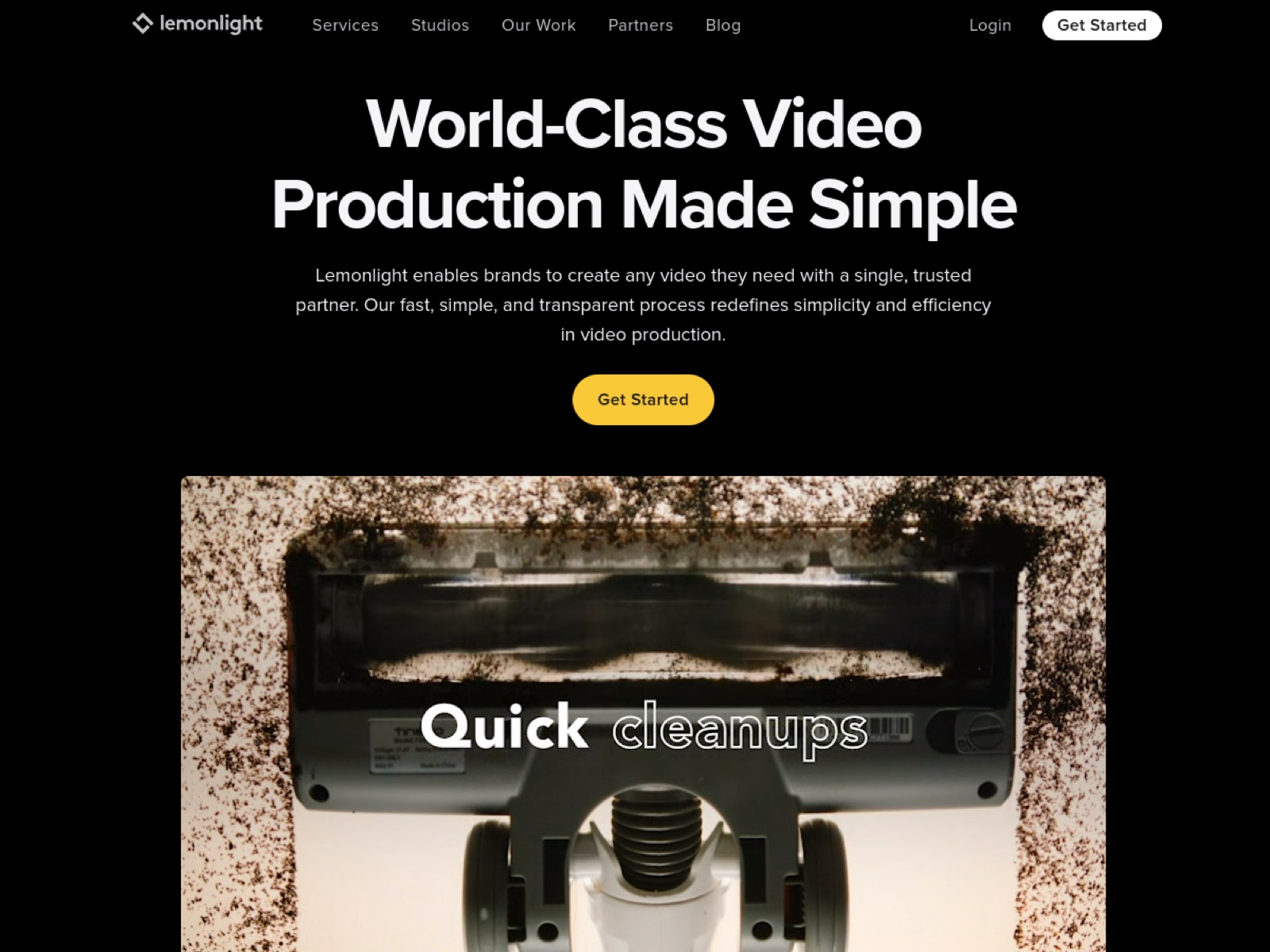
Lemonlight is a full-service video production company that lets brands manage strategy and production under one roof, offering scripted, doc-style, animated, AI, and curated video styles. It leans on a large distributed crew network to deliver everything from single videos to bulk content across many markets. The company positions itself around a fast, simple, and transparent process with quick turnarounds.
Best fit
Marketing teams needing many videos across multiple markets on tight timelines.
Pros and cons
Strengths
- Very high production volume and a large distributed crew network, good for multi-city or bulk shoots
- Wide range of video styles under one roof (scripted, doc-style, animated, AI, curated)
- Emphasis on transparent pricing and fast turnarounds
Trade-offs
- Volume/network model can feel less boutique than a dedicated creative-director-led shop
- Breadth over specialization means it is not positioned as a deep expert in any single niche (e.g. high-end animation)
- Best suited to marketing teams that value speed and scale over bespoke craft
Website: Lemonlight
10. Casual Films
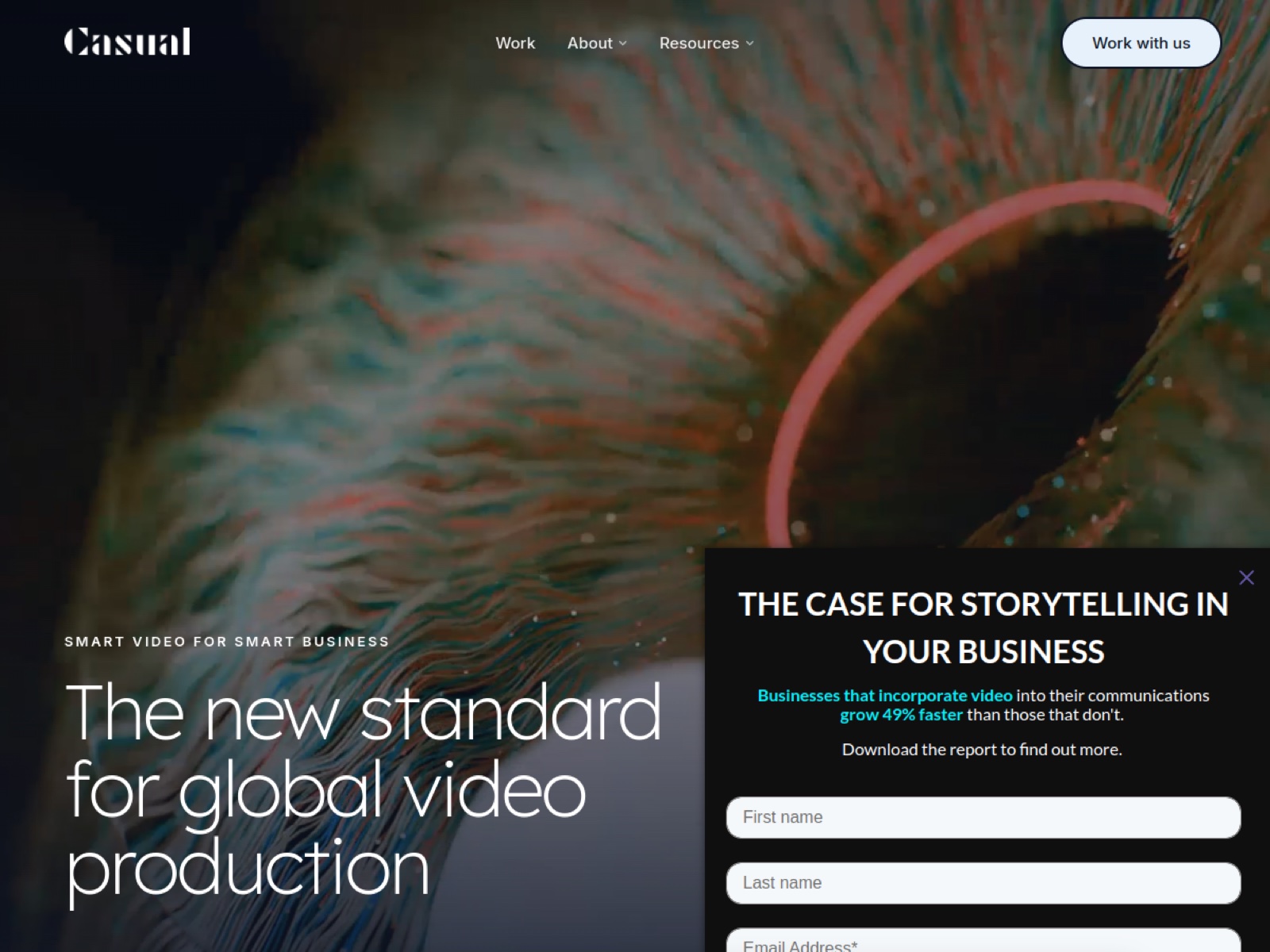
Casual Films is a global, full-service video content production agency operating from multiple offices across several countries, with in-house creatives, producers, filmmakers, editors, and animators. It has produced brand and corporate video since 2006 and markets a science-led methodology (branded StoryPulse) aimed at maximizing attention, memory, and emotion. Its work spans creative development, production, and post-production for large enterprise clients.
Best fit
Enterprises needing consistent, high-quality brand and corporate video across multiple countries.
Pros and cons
Strengths
- Truly global footprint with offices across multiple countries for multi-market production
- Full in-house team spanning strategy, filming, editing, and animation
- Long track record with large enterprise and corporate clients
Trade-offs
- Enterprise/global positioning likely means higher price points than boutique shops
- Corporate and internal-comms strength may be less of a fit for scrappy short-form social content
- Proprietary-methodology framing is heavier process than some small teams want
Website: Casual Films
11. Wyzowl
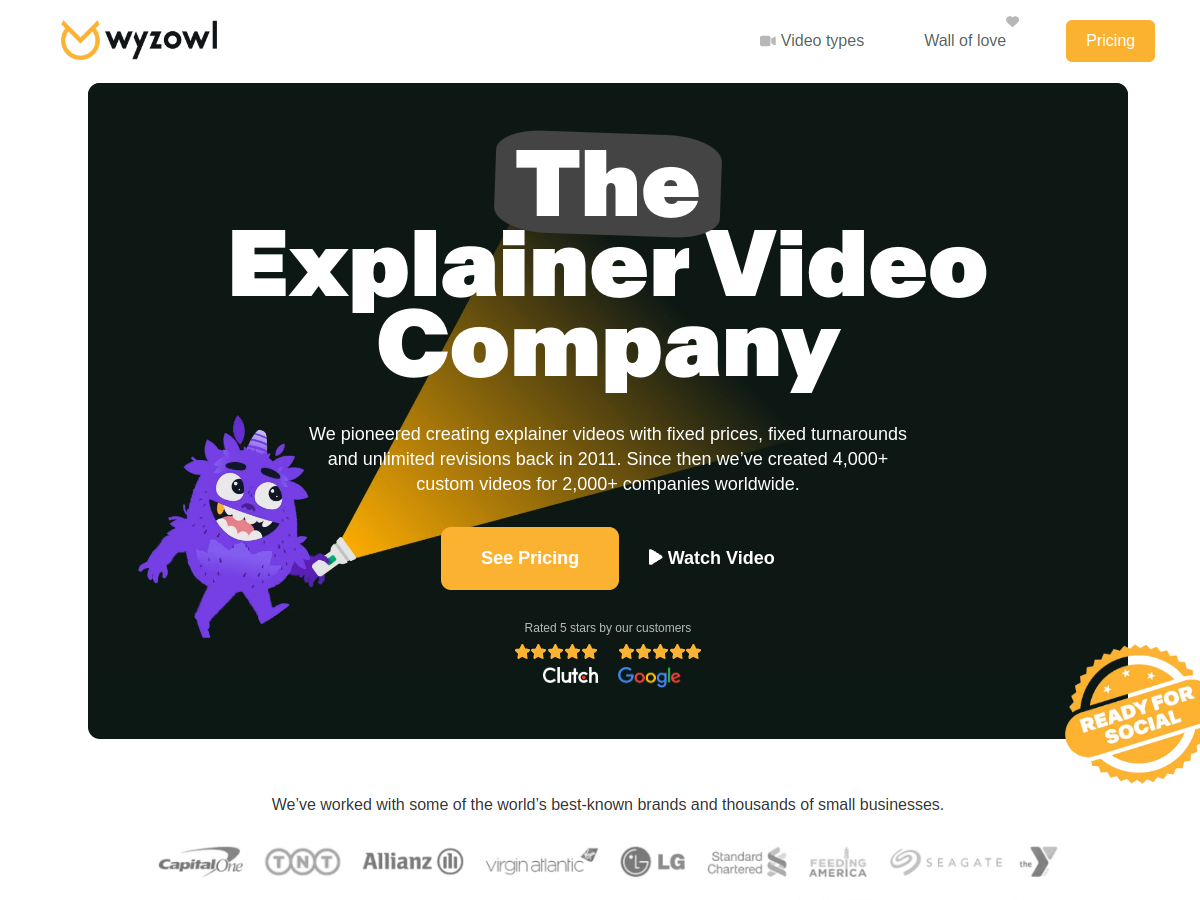
Wyzowl is a UK-based animated video agency, based in Southport, that describes itself as one of the world’s leading explainer video agencies. Since 2011 it has produced custom explainer, testimonial, app demo, training, and social videos, pioneering a model of fixed prices, fixed turnarounds, and open-ended revisions. Its team of copywriters, illustrators, and animators handles projects end to end from scripting through animation and music.
Best fit
Brands wanting a predictable-cost animated explainer without scope creep.
Pros and cons
Strengths
- Transparent fixed-price, fixed-turnaround model with open-ended revisions removes pricing uncertainty
- Deep, long-running specialization in animated explainer video since 2011
- End-to-end handling from script and illustration through animation and music
Trade-offs
- Focused on animation and explainers rather than live-action or cinematic brand films
- UK-based, which may matter for clients wanting local on-site production elsewhere
- Productized/templated process is less flexible for highly bespoke, non-explainer creative
Website: Wyzowl
12. Explainify
Explainify is an animated video production agency focused on explainer videos for fast-moving B2B teams, with 14+ years in the space. It offers 2D animation, motion graphics, character-driven animation, live-action, short-form social ads, landing page videos, and product walkthroughs, and emphasizes leading with messaging strategy rather than just animation. The company markets a Frustration-Free approach where it handles both strategy and execution end to end.
Best fit
B2B and SaaS companies needing to explain a complex product clearly.
Pros and cons
Strengths
- Strong strategy-first positioning, not just execution of animation
- Long specialization in B2B explainer and product-narrative video
- Mix of animation, motion graphics, and live-action options for the same client
Trade-offs
- Concentrated on explainer and B2B use cases rather than broad brand-film production
- Less oriented toward large-scale live-action or event shoots
- Best for companies with a complex product to explain, not general brand awareness content
Website: Explainify
13. Digital Brew
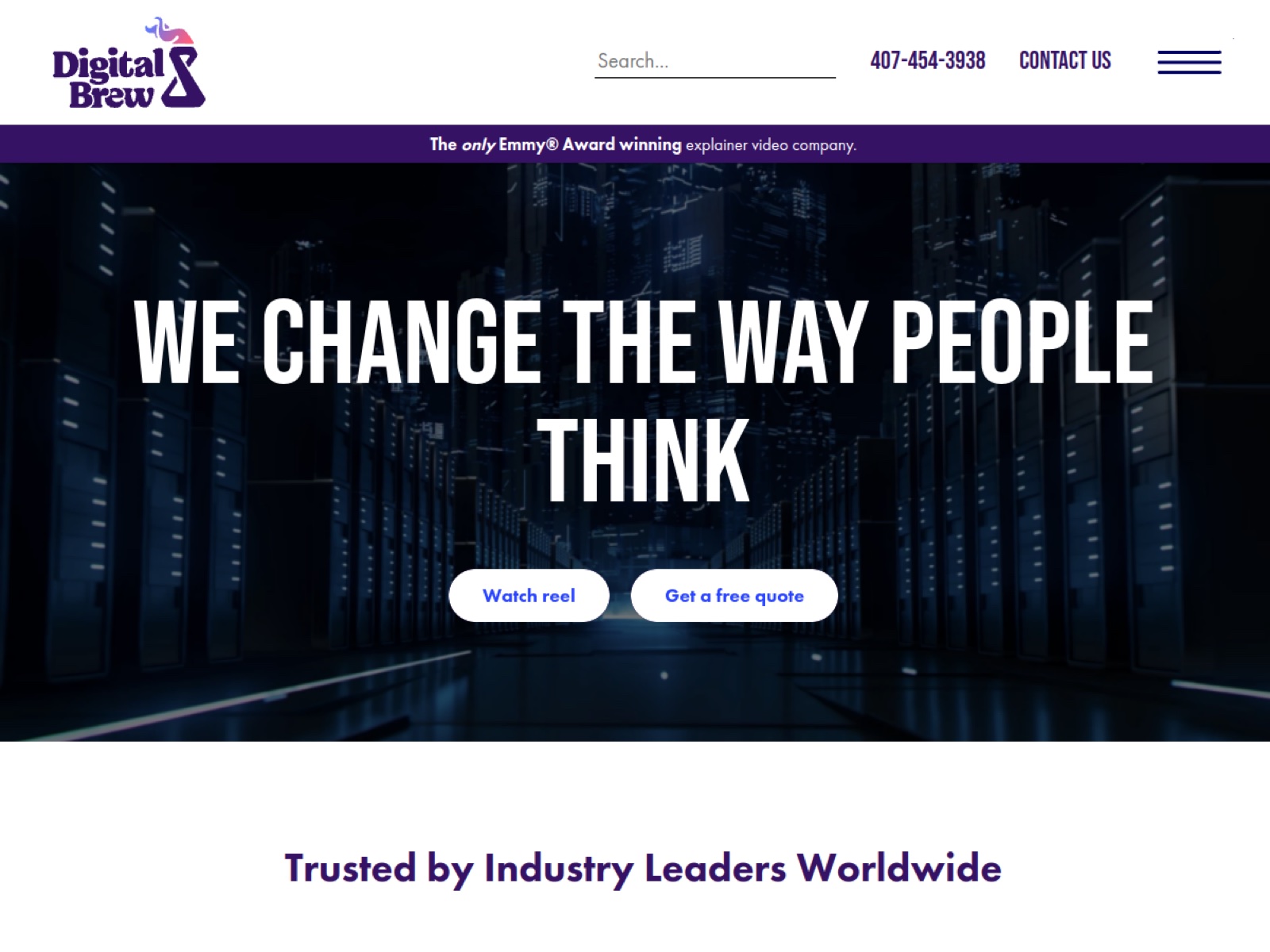
Digital Brew is an Orlando-based animated explainer video studio producing 2D, 3D, and live-action videos, plus motion graphics and infographics, with a small in-house team of animators, artists, and writers. It positions itself as a marketing agency first and an explainer company second, prioritizing business results, and follows a structured six-stage process from creative brief to final delivery. The studio is an Emmy, Telly, and Addy award winner.
Best fit
Brands wanting results-focused animated explainers across 2D, 3D, and live action.
Pros and cons
Strengths
- In-house team across 2D, 3D, live action, and motion graphics
- Marketing-results framing rather than art-for-its-own-sake
- Award recognition (Emmy, Telly, Addy) signals production quality
Trade-offs
- Small in-house team may limit simultaneous large-scale capacity
- Rooted in explainer/animation rather than large live-action brand productions
- Single US location (Orlando) is less suited to clients needing global on-site crews
Website: Digital Brew
Top 13 Video Content Agencies Comparison
| Title | Implementation complexity | Resource requirements | Expected outcomes | Ideal use cases | Key advantages |
|---|---|---|---|---|---|
| Moonb | Medium, onboarding an embedded creative team | Ongoing retainer/custom pricing; dedicated collaboration and brand onboarding | Predictable weekly high-quality video and motion assets with fast turnarounds | Teams needing steady weekly output and strong brand consistency | Dedicated embedded team, wide service scope, real-time collaboration |
| Sandwich | Medium to High, full creative and production workflows | Premium costs and longer timelines for high-end production | Distinctive, product-focused brand films and commercials | Tech and app launches, memorable brand campaigns | Witty product-first creative, broadcast experience |
| Spear Growth | Low, per-video briefs with no onboarding program | From $300 per video, no retainer | Fast AI-animated demos, explainers, and LinkedIn ads | SaaS teams testing video on small budgets | Five-day turnaround, SaaS-native scripting, five revision rounds |
| Demo Duck | Medium, project-based end-to-end production | Project costs; scripting through post-production per project | Clear explainer videos and versatile marketing/internal formats | Explainers, testimonials, internal comms, social content | Versatile format expertise, simplifies complex topics |
| Epipheo | High, strategy-led narrative development | Premium pricing; custom quotes and possible retainers | Strategy-driven explainers and brand films that reveal core product insights | Complex products needing narrative clarity and differentiation | Strong storytelling focus, retainer options for series |
| Vidico | Medium, production tuned for B2B buyer journeys | Custom pricing; mix of animated and live-action capabilities | Outcome-oriented explainers, demos, and ads with performance focus | SaaS, fintech, cybersecurity, enterprise tech marketing | B2B-focused process, cross-channel consistency, measurable outcomes |
| Indigo Productions | High, large-scale, broadcast-level production and events | Larger costs, complex logistics, multi-camera and live-streaming capabilities | Broadcast-quality corporate films, executive updates, and live events | Corporate communications, town halls, high-production campaigns | End-to-end production, live streaming and VFX expertise |
| Shootsta | Low to Medium, credit-based, scalable workflows | Predictable credit pricing; platform templates and global operators | High-volume, fast-turnaround videos with consistent branding | Ongoing series, internal comms, social media at scale | Fast first cuts, scalable credit model, platform-driven consistency |
| Lemonlight | Medium, network-driven full-service production | Custom pricing; large distributed crew network | High-volume video across many markets on tight timelines | Bulk and multi-market shoots for marketing teams | Very high production volume, wide range of styles under one roof |
| Casual Films | Medium to High, global multi-office production | Custom pricing; in-house teams across several countries | Consistent brand and corporate video across countries | Enterprises needing multi-market corporate video | Global footprint, full in-house team, enterprise track record |
| Wyzowl | Low to Medium, productized explainer workflow | Fixed price and fixed turnaround with open-ended revisions | Predictable-cost animated explainers without scope creep | Brands wanting a set-cost explainer video | Fixed-price model, deep explainer specialization since 2011 |
| Explainify | Medium, strategy-first animated production | Custom pricing; strategy plus execution end to end | Strategy-led animated explainers for complex products | B2B and SaaS explaining a complex product clearly | Strategy-first positioning, B2B explainer specialization |
| Digital Brew | Medium, structured six-stage explainer process | Custom pricing; small in-house 2D/3D/live team | Results-focused animated explainers across 2D, 3D, and live action | Brands wanting results-focused explainer content | In-house 2D/3D/live team, Emmy/Telly/Addy recognition |
One thing worth settling before you hire anyone is distribution. The strongest video programs are built to travel across channels, not left to sit on a landing page after launch. Ross Simmonds makes that case well in his talk on building a B2B content engine, and it is a useful lens for what you should expect a content partner to actually run.
Your Checklist for Choosing a Partner
A common buying mistake looks like this. The team approves a polished reel, signs a project, then realizes two months later that the actual problem was throughput, review delays, or weak scripting for a technical product. Choosing a video content agency is less about taste and more about fit.
Start by defining the job. A single launch film, a quarterly campaign series, and weekly always-on content call for different engagement models. Project-based shops fit high-stakes one-off work with a clear brief and finish line. Retainers fit teams that need a partner to hold brand context across a stream of explainers, demos, and campaign assets. A dedicated team model fits ongoing demand when internal bandwidth is already stretched.
Volume is only part of it. Context transfer is usually the hidden cost. If the agency has to relearn your product, audience, compliance rules, and visual system on every brief, cycles get slower and revisions pile up. Teams that produce video regularly should ask how the partner stores knowledge, who stays on the account, and what happens when priorities change mid-month.
Here’s the checklist I’d use:
- Match the engagement model to the workload: Project, retainer, and dedicated team setups solve different operational problems.
- Check how brand knowledge is retained: Ask who owns guidelines, footage libraries, templates, and past feedback.
- Review writing samples, not just the reel: Strong visuals do not guarantee clear scripting for complex offers.
- Ask about turnaround under normal conditions: A shop can produce great work and still miss your launch window.
- Look for format depth: Demos, explainers, paid social edits, internal comms, and customer stories require different production habits.
- Test the review process: Ask how comments are collected, who consolidates feedback, and how many revision rounds are typical.
- Confirm ownership terms early: Usage rights, source files, and edit access should be written into the agreement.
- Check sector discipline: Regulated or technical categories need approval workflows and accuracy, not just a strong style.
One practical filter helps here. Pick the constraint you most need to remove. For one team that is strategic storytelling; for another it is broadcast-level production for an executive event; for a third it is reliable weekly output without adding headcount. That framing makes the shortlist clearer and keeps the decision tied to operating needs, not just creative preference.
If your team needs more than a one-off project, Moonb is built for teams that need video, motion, and design delivered every week. You get a dedicated creative team that learns your brand, works closely with your team, and keeps output moving without the delay of hiring.
Frequently asked questions
It depends far more on scope than on the name on the invoice. A single produced brand film with a crew and a location can run from a few thousand dollars into six figures, while animated explainers and social edit packages usually sit lower because there is no shoot day. Most project shops quote per deliverable, and a dedicated creative team tends to work on a set monthly cost tied to output. Ask for a written scope before you compare two quotes, because 'a video' can mean wildly different things.
For a produced piece with a shoot, I tell clients to plan on three to six weeks from kickoff to final cut, and longer when there is heavy animation or several approval rounds. Edits of existing footage and short social cuts move much faster, often inside a week. The real variable is your review process: consolidated feedback in one pass keeps a project on schedule, while notes scattered across a dozen emails are what actually blow timelines.
Not automatically, so put it in writing before you start. Some studios hand over final exports but keep the raw footage, project files, and licensed assets, which makes future edits impossible without going back to them. I would confirm usage rights, source-file access, and any stock or music licenses in the agreement up front, especially in regulated sectors where you may need to re-version work later.