
Understanding Corporate Video Production Costs


So, you're wondering how much a corporate video actually costs. Let's get right to it.
The honest answer is that a professional video can range anywhere from $5,000 to over $50,000. Simpler projects might sneak in under that, while big, cinematic brand films can easily soar past it. The final number really boils down to the complexity of the story, the size of the crew, and how many different video versions you need for your campaign.
Answering Your Biggest Question: How Much Does A Corporate Video Cost?
Think of it like buying a car. You can get a perfectly reliable sedan that gets you from point A to B, or you can opt for a high-end luxury SUV with all the bells and whistles. Both are cars, but the experience—and the price tag—are worlds apart. Video production is exactly the same.
A straightforward testimonial video shot in a single location will naturally be on the lower end of that spectrum. On the other hand, a multi-day brand film with professional actors, custom animations, and several different locations is going to command a much larger budget. It’s all about the ambition and scope of your project.
Quick Look At Video Production Cost Ranges By Type
To give you a clearer picture, here’s a quick breakdown of what you can generally expect to invest for different types of corporate videos. This isn't set in stone, but it's a solid starting point for budgeting.
Keep in mind that these ranges are guides. The final cost always comes down to the specific creative choices and production requirements for your unique video.
The Three Core Cost Stages
To really understand where your money is going, you have to look at the three distinct phases of production. Every quote you get will be built around the costs from each of these stages.
- Pre-Production: This is all the planning and strategy. It's where the foundation is laid for a successful shoot. Costs here cover things like concept development, scriptwriting, storyboarding, scouting for locations, and casting actors. A solid pre-production phase saves you from expensive surprises down the road.
- Production: This is the actual shoot day—lights, camera, action! Your budget here pays for the director, camera operators, sound and lighting techs, actors or interview subjects, and all the gear needed to capture the footage.
- Post-Production: Once filming is wrapped, the raw footage has to be turned into a finished video. This is where editing, color correction, sound mixing, adding motion graphics or animation, and licensing music all happen.
Knowing these components gives you a clear map of your investment. Recent industry data shows that simple testimonial videos often land in the $10,000–$15,000 range, while more involved brand stories can climb to $20,000–$50,000.
Think of your video budget as a recipe. The ingredients—crew, gear, locations, and editing time—determine the quality and flavor of the final dish. Cutting corners on key ingredients will always affect the outcome.
To get a handle on your investment, it's worth digging into understanding webinar costs and maximizing value. Even though it's a different format, the core principles of balancing cost and value are the same. For a more detailed look into video-specific pricing, check out our guide on the https://www.moonb.io/blog/average-cost-of-video-production. This will help you set realistic expectations for your next project.
Breaking Down the Three Pillars of Video Production Costs
Every dollar in your video budget has a specific job to do. If you really want to get a handle on corporate video production costs, you have to see how the total investment gets split across three critical phases.
Think of it like building a house: you have the architectural plans, the actual construction, and then the interior finishing. Each stage is totally distinct with its own set of costs, and if you skimp on one, you're going to feel it in the final product.
This diagram shows how the total cost is built on the foundation of these three essential phases.
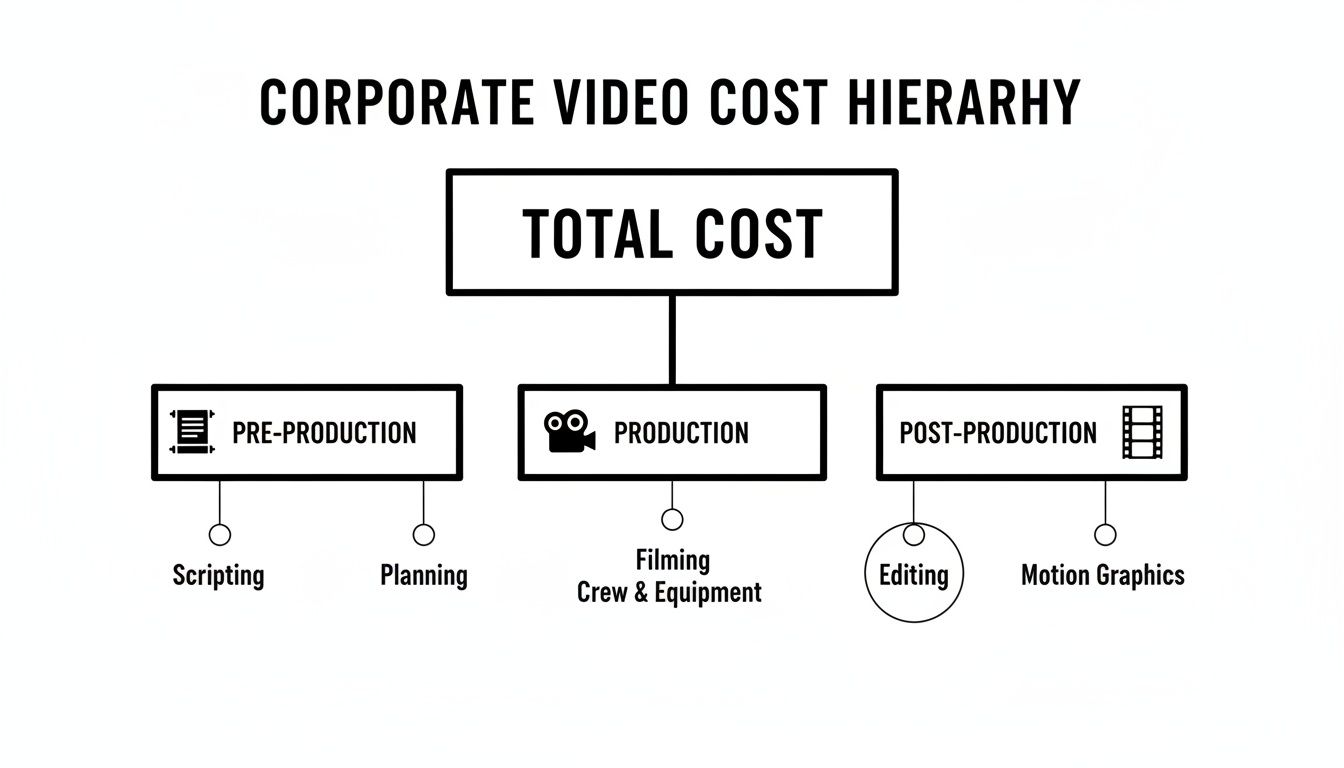
As you can see, pre-production, production, and post-production are the fundamental building blocks that come together to determine your final budget.
Pre-Production: The Strategic Blueprint
This is the planning stage, and honestly, it's where a great video is truly made. Solid pre-production is the single best way to prevent expensive mistakes and agonizing delays once the cameras are rolling. This is where the vision gets translated into an actionable plan, and it usually accounts for 20-30% of the total budget.
The costs here are all about strategic and creative brainpower. It’s not just about kicking around ideas; it’s about pouring a solid foundation for the entire project.
Key cost drivers in pre-production include:
- Concept Development: Nailing down the core idea, messaging, and overall creative direction.
- Scriptwriting: Penning the dialogue, narrative, or on-screen text that will guide the story.
- Storyboarding & Shot Lists: Visually mapping out each scene and creating a detailed list of every single shot you need. This is what makes filming day run like a well-oiled machine.
- Location Scouting: Finding and securing the perfect spots that fit the story and your brand's vibe. This can also include permit fees.
- Casting & Talent: Auditioning and hiring actors, voiceover artists, or on-screen presenters.
A thorough pre-production process is absolutely non-negotiable for a professional result. For a complete rundown of everything involved, check out our detailed video production checklist.
Production: Capturing The Vision
This is the part everyone pictures when they think of making a video—the whole "lights, camera, action!" scene. The production stage is where all that careful planning comes to life, and it's often the priciest part of the journey, making up 40-50% of the total budget.
The main expenses here boil down to people and gear. The size of your crew and the quality of the equipment are the biggest dials you can turn that will impact your final costs.
Here’s a look at what your budget covers during the shoot:
- Director & Crew: This includes the director, cinematographer (or Director of Photography), camera operators, sound engineers, lighting technicians (gaffers), and production assistants.
- Talent: The fees for the actors, interviewees, or hosts who appear on camera.
- Equipment Rental: High-end cameras, specialty lenses, lighting packages, audio gear, drones—you name it.
- Location & Studio Fees: Costs for renting a studio space or paying for access to specific shooting locations.
- Travel & Logistics: Expenses for getting the crew, talent, and gear where they need to be, especially for shoots that happen in multiple places.
Hourly rates are a massive factor in this phase. For example, US agencies often charge between $100–$149 per hour for their time. Crew costs can be broken down even further, with cinematographers and directors commanding $50–$300/hour, while talent can range anywhere from $150–$2,500 per day.
A common misconception is that the shoot day is the most important part. In reality, a smooth production day is the result of meticulous pre-production. A disorganized shoot almost always leads to budget overruns and a weaker final product.
Post-Production: Assembling The Final Story
Once the filming wraps, you don't have a video yet. What you have is a pile of raw footage, audio files, and other assets. The post-production phase is where the real magic happens, transforming all those raw pieces into a polished and compelling story. This final stage typically accounts for 30-40% of the budget.
This is a highly skilled, labor-intensive process that involves a lot more than just dragging and dropping clips into a timeline.
The main line items in post-production are:
- Editing: The editor takes all the best takes, shapes the narrative, and sets the rhythm and pacing of the video.
- Color Grading: This involves tweaking colors and tones to create a specific mood and ensure a consistent, professional look from shot to shot.
- Sound Design & Mixing: Cleaning up audio, adding sound effects, and mixing everything together for a crystal-clear and immersive soundscape.
- Motion Graphics & Animation: Creating animated text, logos, or visual effects that help tell the story and highlight key information. Rates for a good motion graphics artist can be $250–$1,000 per day.
- Music Licensing: Securing the rights to use a piece of music, which can run from a few hundred dollars for a stock track to thousands for a custom-composed score.
Ultimately, each of these three pillars is essential. Understanding how your budget is spread across them allows you to have smarter conversations with production partners and make better decisions about where your money goes.
Exploring Common Video Pricing Models
When you start shopping around for a corporate video, you’ll quickly notice that no two production partners price their work the same way. Getting a handle on the different pricing models is the first step to managing your budget, sidestepping surprise costs, and finding a partner that actually fits how you work.
Think of it like getting a new cell phone plan. Some people love the predictability of a flat monthly fee, while others would rather just pay for the data they actually use. Each model has its own pros and cons, and the right one for you really boils down to your project’s scope, how much flexibility you need, and what your long-term content plans look like.
Let's unpack the most common ways video work gets priced.
The Per-Project Flat Fee
This is probably the most straightforward model you'll run into. You and the production company hash out a detailed scope of work—everything from the script and locations to the number of shoot days and final deliverables. Once that’s locked in, they give you a single, all-in price for the job.
The biggest win here is predictability. You know exactly what you’re spending from the get-go, which makes life easy for your finance team. The downside? It’s rigid. If you suddenly decide to add a new scene, need more edits than you originally agreed to, or have a change of heart on the creative direction, you're looking at change orders and extra costs.
A flat-fee project is like buying an all-inclusive vacation package. The total cost is clear upfront, but if you decide to add an extra excursion that wasn't on the itinerary, it’s going to cost you more.
Per-Hour or Day Rate Pricing
Another popular route is billing based on time. A production company might have a set hourly rate for their crew or a specific day rate that covers both people and gear. This approach gives you way more flexibility than a fixed-fee project.
If your project's scope is a bit fuzzy or you know you’ll need a crew for an unpredictable amount of time (like filming a live event), this can be a fantastic option. The danger, of course, is scope creep. Without a tight plan and someone keeping a close eye on the clock, those hours can stack up fast, leaving you with a final bill much larger than you planned for.
A couple of things to keep in mind here:
- Crew Rates: A solid, professional videographer can run anywhere from $100 to $400 per hour.
- Total Time: Don't forget, a polished 30-second commercial isn't just a few hours of shooting. It can easily take weeks to go from a rough idea to the final product you see on screen.
The Subscription Model
A more modern approach that’s been gaining a lot of traction is the subscription model. This is built to give you the budget-friendliness of a flat fee but with the flexibility of having an ongoing production resource. You pay a set monthly fee for access to a creative team for a certain amount of work or even unlimited requests.
This is a game-changer for companies that need a steady stream of video content for social media, ongoing marketing campaigns, or internal comms. It shifts video production from being a series of expensive, one-off projects into a predictable operating expense. To see how this compares to other options, it's helpful to look at various video pricing models to understand the landscape.
The real magic of this model is building a long-term relationship with a creative partner who gets to know your brand inside and out. You can learn more about how subscription-based design services are shaking things up for marketing teams. It cuts out the tedious back-and-forth of negotiating every single project and lets you create content continuously and with more agility. Knowing your options means you can pick a pricing structure that truly supports your company’s goals.
Sample Budgets From Simple To Complex
Talking about line items is one thing, but seeing how they all come together in a real-world budget is where the lightbulb really goes on. To give you a better feel for your own project, let’s walk through three different budget scenarios.
You'll see how a straightforward project focuses on being clear and efficient, while a high-end production goes all-in on creating a cinematic experience that connects with viewers on an emotional level.
Simple Budget: A 2D Animated Explainer Video
Picture a tech startup that needs a sharp, 90-second animated video to explain its new software. The goal is simple: put it on the homepage and give the sales team a powerful tool for outreach. The style is clean, professional 2D motion graphics—nothing too flashy, but perfectly on-brand.
This kind of project is the perfect gateway into professional video content. It's a manageable budget because you skip the costs of a film crew, locations, and actors, putting all the focus on talented post-production artists.
Here’s what that budget would likely cover:
- Scriptwriting & Storyboarding: A tight script and a solid visual plan are everything. This step makes sure the animation tells the right story from start to finish.
- Professional Voiceover: A skilled voice artist can bring the script to life, matching the brand's energy and tone perfectly.
- Custom 2D Animation: This is the heart of the project. It covers the animator's time to design the graphics, bring them to life, and sync everything flawlessly to the audio.
- Stock Music License: A great, royalty-free music track adds that final layer of polish without the hefty price tag of a custom score.
Total Estimated Cost: $7,000 - $15,000
This price point gets you a high-quality, custom-animated video that can work for you for years to come. For an even more detailed breakdown, check out our guide on explainer video costs.
Mid-Range Budget: A Client Testimonial Video
Now, let's imagine an established B2B company that wants to build trust with a compelling client testimonial. The plan is to film at the client's office, capturing an authentic interview and some B-roll footage of their team actually using the service. The final cut will be around two minutes.
This budget is a step up because it involves filming on-location, which means bringing in a crew and gear. But it’s still kept lean by using a small team and sticking to a single location for the shoot.
Key investments for a mid-range project like this include:
- Small Production Crew: For a one-day shoot, you’re typically looking at a director/producer, a cinematographer, and a sound recordist.
- Professional Camera & Audio Gear: Using top-notch equipment is non-negotiable. It's what separates a professional-looking video from an amateur one.
- Editing & Color Grading: The editor’s job is to weave the interview and B-roll into a powerful story. Color grading then gives the footage a consistent, cinematic look.
- Simple Motion Graphics: This just means adding on-screen text for the client's name, title, and company logo.
Total Estimated Cost: $10,000 - $25,000
This range reflects the added logistics of a live-action shoot. Industry data often places testimonial videos in the $10,000–$15,000 bracket, while more involved social media videos can climb to $15,000–$20,000. These numbers show just how much corporate video production costs can vary—anywhere from $1,000 to over $20,000 per finished minute, depending on what you're trying to achieve. You can get more video production agency pricing insights on Clutch.co.
High-End Budget: A Cinematic Brand Film
Finally, let's go big. Think of a national consumer brand launching a flagship product. They need a visually stunning, emotionally charged two-minute film for a major campaign. This is the kind of project where you pull out all the stops to create something unforgettable.
The costs here jump significantly because the creative ambition is so much higher. This means a larger crew, professional actors, multiple locations, and advanced post-production work to get that broadcast-quality finish.
A top-tier budget like this would cover:
- Extensive Pre-Production: This includes in-depth concept development, a script from a seasoned copywriter, scouting locations in different cities, and casting professional actors.
- Large Crew & High-End Equipment: We’re talking a full crew with a director, producer, gaffer, grips, and more, shooting over several days with cinema-grade cameras and lenses.
- Multiple Locations & Talent Fees: This covers securing permits for premium spots and paying SAG-AFTRA rates for experienced, professional talent.
- Advanced Post-Production: This involves complex editing, custom visual effects, a specially composed musical score, and a professional sound mix to tie it all together.
Total Estimated Cost: $50,000 - $150,000+
A budget of this size is a major investment. You’re not just making a video; you're creating a powerful brand statement designed to define a campaign and leave a lasting mark on your audience.
Choosing Your Ideal Production Partner
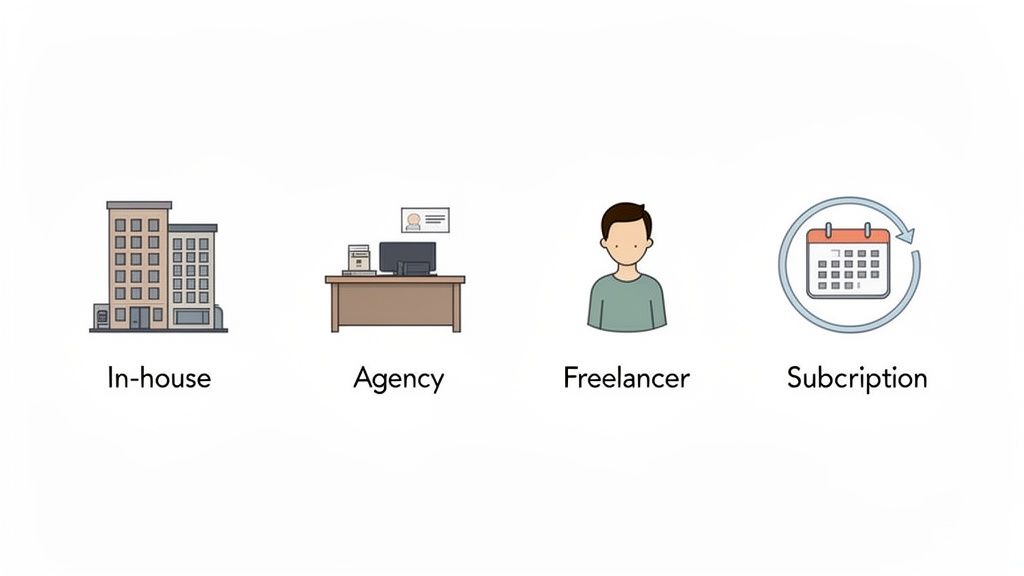
Knowing the numbers behind corporate video production is the first hurdle. The next, and arguably more important, decision is picking who will bring your vision to life. The right partner can be the difference between a video that nails its goals and one that completely misses the mark, no matter how much you spend.
This isn't about just finding the cheapest quote. It’s a strategic choice that shapes everything from creative quality and brand consistency to how fast you can get things done. Let's break down the four main ways you can get your videos made.
The In-House Team
Building your own creative team gives you the ultimate control. An in-house crew lives and breathes your company culture every day, so you can be sure every video is perfectly on-brand. They're always right there, ready to capture a spontaneous moment or quickly turn around a last-minute project.
But that level of control doesn't come cheap. The overhead is a major factor—think salaries, benefits, expensive gear, software licenses, and constant training. For most companies that aren't at the enterprise level, the high fixed costs of an in-house team just aren't practical.
The Traditional Agency
Hiring a full-service video production agency is the classic move, and for good reason. You're buying access to a whole team of seasoned pros—directors, editors, strategists—who can throw serious creative firepower at your project. They take care of everything from the initial idea to the final cut, which is perfect for big, high-stakes brand films.
The trade-off? Cost and speed. Agencies charge a premium for their expertise and all the project management that comes with it. The process can also drag on, with detailed proposals, long contract negotiations, and multiple layers of communication that can slow things down for marketing teams needing a steady stream of content.
The Freelance Specialist
For a specific, well-defined job, bringing on a freelancer can be a game-changer. Need a talented animator for a single explainer video? Or an experienced camera operator for a one-day event? Freelancers offer specialized skills without the overhead of an agency or the commitment of a full-time hire.
The problem comes when you try to scale. Juggling a handful of freelancers for one project can quickly turn into a project management nightmare. Plus, using different people for every video can lead to a choppy, inconsistent look for your brand over time, watering down your message.
Choosing a production partner is like picking a vehicle for a road trip. An in-house team is like owning a fully-stocked RV—always ready but expensive to maintain. An agency is a luxury charter bus for a big one-time event. Freelancers are like renting a specific car for a specific task. Each has its place, but the choice depends entirely on the journey you're planning.
The Subscription Service
A modern approach that mixes the best of the other models is the subscription service. Instead of paying per project, you pay a flat monthly fee for access to an entire on-demand creative team. This model is built for businesses that need a consistent flow of high-quality video content without the massive fixed costs of an in-house team or the friction of hiring an agency for every little thing.
This route gives you predictable costs and rock-solid creative consistency. You get to build a real relationship with a dedicated team that gets to know your brand inside and out, making sure everything they create feels unified. If you want to dive deeper into vetting partners, our guide on how to choose a video production company breaks it all down. This model is perfect for giving modern marketing teams the agility they need to keep their content calendars packed and their campaigns feeling fresh.
Rethinking Video Production For Sustainable Growth
Let’s be honest: trying to figure out corporate video production costs can feel like you’re staring at a giant, tangled ball of yarn. But it all boils down to a simple strategic choice. The real goal isn't just to make one video; it’s to build a reliable engine for business growth. That means we need to stop talking about video as a one-time project expense and start treating it like a sustainable, long-term investment.
For too long, businesses have been stuck with clunky production models full of budget surprises and timelines that seem to stretch on forever. Agile marketing teams just can’t afford to work that way anymore. The modern game is all about creating a steady flow of high-quality video that fuels every part of the customer journey—without blowing up your budget.
From One-Off Projects To Ongoing Impact
Thinking of video as a series of isolated projects is a recipe for inconsistency and wasted money. A winning strategy treats video as a core part of your marketing operations, just like your blog or social media channels. It’s not an afterthought; it’s a constant.
This requires a partnership model that puts a few key things first:
- Budget Predictability: Moving away from surprise invoices and scope creep toward a fixed, manageable cost you can actually plan for.
- Creative Consistency: Making sure every single video reinforces your brand identity and message, creating a cohesive experience for your audience.
- Operational Agility: Having the ability to create content quickly to jump on market trends or support new campaign needs.
The most effective video strategies aren’t built on massive, infrequent cinematic productions. They’re built on a steady drumbeat of valuable, on-brand content that keeps your audience engaged and moves your business forward.
Positioning Your Brand For A Video-First Future
Ultimately, getting a handle on corporate video production costs is the first step toward mastering video as a growth tool. By shifting away from the old, rigid agency or freelance models, you can adopt a much more nimble approach.
Modern solutions, like subscription services, offer a clear path to sustained success. They give you the strategic oversight and creative talent you need, but packaged in a model that actually matches the pace of today's marketing. This ensures your brand can consistently show up, tell its story, and win in a world where video is no longer just an option—it’s essential.
Got Questions About Video Production Costs? We've Got Answers.
Figuring out the costs of corporate video production can feel a bit like navigating a maze. It's a world with a lot of variables, so naturally, questions pop up. Here are some quick, no-nonsense answers to the questions we hear most often from clients.
How Long Does It Take To Make A Corporate Video?
Just like the price, the timeline for a corporate video can be all over the map. A straightforward testimonial video, shot in one location, might come together in just 2-3 weeks. On the other hand, a more ambitious brand film with custom animation and several days of shooting could easily take 8-12 weeks—or even longer—to get from the first idea to the final file.
The single biggest thing that stretches out a timeline? Almost always, it's the back-and-forth during pre-production and approvals. A clear vision from the start and quick, decisive feedback are the secret ingredients to keeping any project moving on schedule and on budget.
What Is The Most Expensive Part Of Video Production?
While every project is different, the production phase—the actual days you're filming—is typically the priciest part of the budget. It’s when the most people and gear come together all at once, and those costs add up quickly.
- Crew Costs: You're paying for the day rates of the director, camera operators, sound techs, and lighting experts.
- Talent Fees: This covers the compensation for any professional actors or on-screen hosts.
- Equipment Rental: High-end cameras, lenses, and specialized lighting don't come cheap.
- Location Fees: You might need to pay for permits or rent out a specific studio or space for the day.
The one exception? For projects heavy on animation, the post-production phase can easily steal the top spot. The hours of detailed work required from skilled animators and motion graphics artists can become the biggest line item.
Can I Get A Quality Video On A Small Budget?
Absolutely. But you have to be smart about it. The secret to a great low-budget video isn't trying to fake high production value; it's about focusing on a strong concept and executing it well. Your top priorities should be a compelling script and crystal-clear audio—these two things have a massive impact on keeping viewers hooked.
For instance, a thoughtfully shot interview or a simple, clean animated explainer can work wonders without breaking the bank. It's all about putting your resources where they'll make the biggest difference for the story you're trying to tell.
Ready to create a consistent stream of high-impact video without the budget surprises? Moonb offers a flexible subscription model that gives you access to a full creative team for a flat monthly fee. Discover a smarter way to produce video content.