12 Best Recruitment Videos From Top Brands (2026)
Twelve of the best recruitment videos from top brands, each with the video itself and a short breakdown of the one idea worth stealing for your own hiring film.

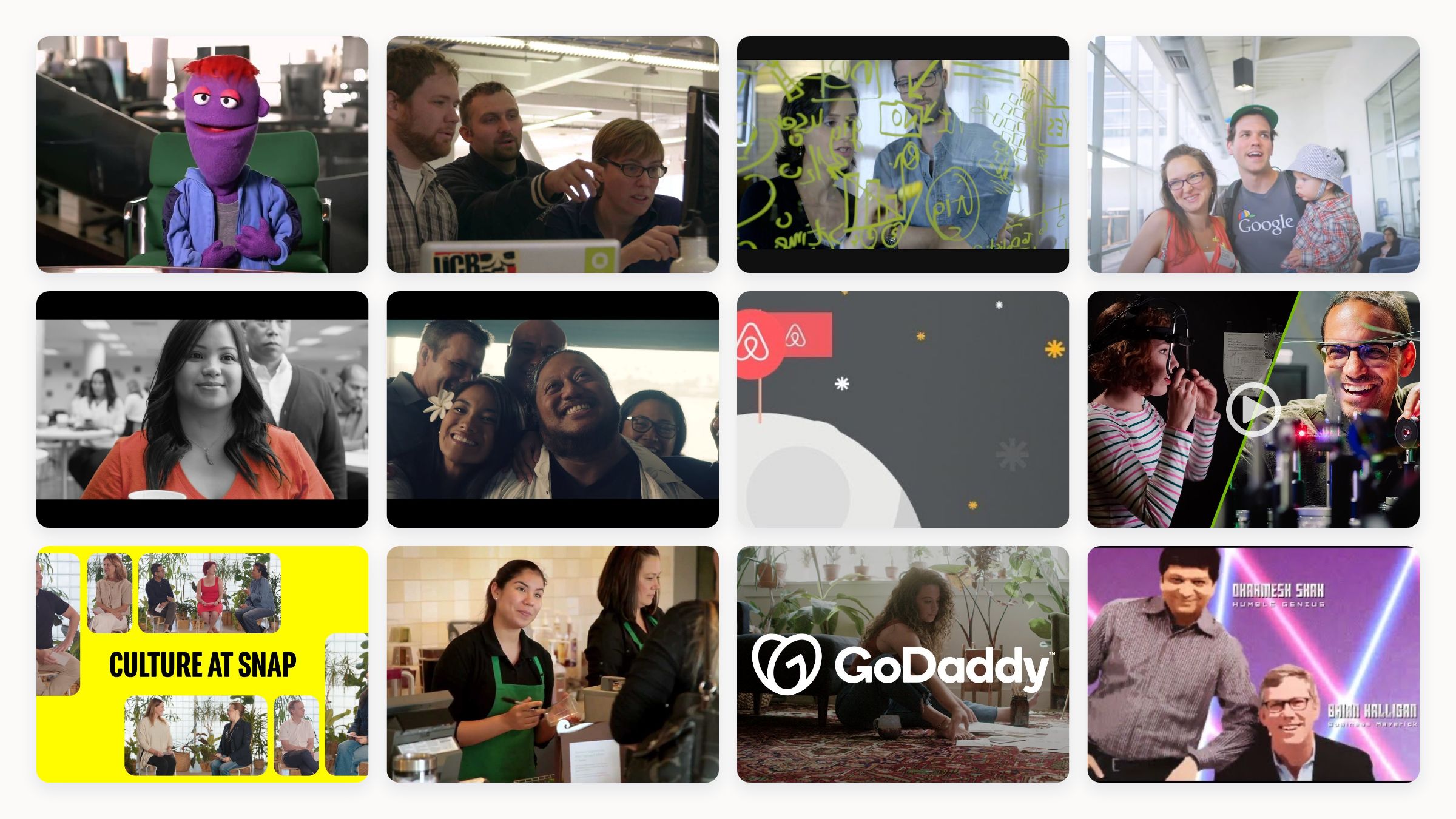
Most recruitment videos are forgettable for the same reason: they list perks a candidate could read on the careers page and shoot them as a montage of people laughing at whiteboards. The ones worth studying do the opposite. They pick a single true thing about the culture and build the whole film around it, so the personality does the persuading instead of a voiceover insisting the company is a great place to work.
Below are twelve that pull it off, each embedded so you can watch it, with a short note on why it lands and the one idea worth taking into your own. They span puppets, stunts, real interns, and animation, which is the point: there is no house style for a great recruitment video, only a clear idea told with conviction.
The 12 best recruitment videos
1. New Zealand Police, “Freeze!”
New Zealand Police turned recruitment into an event. The film packs in more than 70 serving officers, the police band, police cats, helicopters and stunts, and it closes on one plain promise: if you care enough to be a cop, the force will make sure you are capable enough. The fun earns the three minutes, and the fact that everyone on screen is an actual officer keeps it credible.
Steal this: entertain first and cast your own people. A serious ask lands better once the viewer has enjoyed the ride.
2. Dropbox, “Working at Dropbox”
Dropbox swapped every on-screen employee for a colourful custom puppet while keeping the real, unscripted voices of actual staff talking about the work and the culture. The mismatch is disarming, and it tells you more about the company’s personality (results delivered by people who refuse to take themselves too seriously) than any earnest testimonial could. It has become one of the most cited employer-brand videos ever made precisely because the creative device carries the message.
Steal this: a single strong creative device can say “this is who we are” faster than a script ever will.
3. Google, “Google interns’ first week”
This one simply follows five real interns through their first week, letting them describe in their own words what pulled them in and the real projects they already own. There are no actors and no polish for its own sake, which is exactly why it reads as true. It became one of the most-watched recruitment videos ever by trusting real people to be more convincing than a scripted pitch.
Steal this: real employees in their own words beat a rehearsed script almost every time.
4. Cisco, “Don’t Follow the Herd: Be You, With Us”
Cisco shot its film with 116 real employees and no hired actors, so the diversity it celebrates reads as fact rather than casting. It even hides technical easter eggs, a code to solve and a security bug to spot, aimed straight at the engineers it wants watching. It took first place in PR Daily’s workplace-culture category, and it earns that by speaking the audience’s language literally.
Steal this: plant something only your ideal hire will notice, and they will feel seen.
5. Zendesk, “This is Zendesk”
Zendesk’s careers film narrates a warm, slightly offbeat tour of its San Francisco HQ directly to the person who might join, which makes it feel like a conversation rather than a corporate reel. It blends real employee footage, motion graphics, and stop-motion, letting the brand’s sense of humour carry the culture instead of a perks checklist. It has been a reference piece for years for good reason.
Steal this: address the viewer as the future hire, not a general audience, and the film gets personal.
6. HubSpot, “HubSpot Culture”
HubSpot turned its culture code, the kind of document most companies bury in a slide deck, into a watchable film with a cheeky 8-bit aesthetic and hand-drawn art. The low-gloss craft is the message: it feels made by people rather than manufactured, and it bakes in real substance like the “use good judgment” value instead of just asserting the company is fun.
Steal this: a deliberately handmade look can signal authenticity better than a glossy one.
7. Salesforce, “We Are Ohana”
“Ohana,” the Hawaiian idea of family, is an abstract corporate value, and this film makes it concrete by tying it to real employees, customers, and community volunteering rather than a product pitch. It is the piece marketers cite when they talk about values-driven employer branding, because it shows the value in action instead of printing it on a wall.
Steal this: if you lead with a value, prove it with people doing something, not a slogan.
8. NVIDIA, “NVIDIA’s Culture”
Built around the line “like no place you’ve ever worked,” NVIDIA’s film leans on real employees and its “the project is the boss” ethos rather than product marketing. The editing is high-energy and reads as premium without tipping into corporate stiffness, which is a hard balance to strike and part of why it works as a recruiting anthem.
Steal this: one memorable line about how you actually operate can anchor an entire film.
9. Starbucks, “What It’s Like to be a Starbucks Partner”
Starbucks never says “employee.” It says “partner,” and this film leans all the way into that single word, told through real partner voices about connecting with something bigger than a shift. The language itself is the differentiator, tied to real ownership through the company’s stock programme, and the day-in-the-life storytelling is what makes it land with a prospective barista.
Steal this: the words you use for your own people are part of the pitch; choose them on purpose.
10. GoDaddy, “You Belong Here”
GoDaddy’s anthem is built around its recruiting line “You Belong Here,” pairing real employees and workplaces with a message about inclusion and entrepreneurship that maps straight onto its careers positioning. It is purpose-built as a recruitment piece rather than repurposed product marketing, which keeps it clean and on-message.
Steal this: a recruiting tagline works hardest when the whole film is built to earn it, not tack it on at the end.
11. Snap, “Culture at Snap”
Snap’s piece has its own leadership walk through what working there is actually like and how the team lives its values of being kind, smart, and creative. Leadership-led culture videos can easily curdle into a lecture, and this one avoids that by staying specific and on-brand, which makes it credible rather than preachy.
Steal this: leaders on camera work when they are specific about how the place runs, not when they sell.
12. Airbnb, “Introducing the Bélo”
Not a job ad in the narrow sense, this is Airbnb’s “belonging” film, and it belongs here because the mission it articulates is exactly what the company hires against. It leads with emotion and community rather than features, which is the tone strong employer-brand pieces use to make a mission feel worth joining rather than a job worth taking.
Steal this: sometimes the best recruiting film is a mission film; people join a cause more readily than a role.
What the best ones share
Watch all twelve back to back and the pattern is hard to miss. Not one of them opens with a perks list, and not one relies on stock footage of a foosball table. Each picks a single true idea, whether that is NZ Police’s stunts, Dropbox’s puppets, or Starbucks’ one chosen word, and commits to it completely. They trust real people over actors, they let personality do the selling, and they treat the viewer as the future colleague they are hoping to win.
If you take one thing from the set, make it this: decide what is actually, specifically true about working at your company, then build the whole film to express that one thing. The production style matters far less than the clarity of the idea underneath it. A puppet, an intern, or a satirical voiceover can all work; a vague montage insisting you are a great place to work almost never does.
Frequently asked questions
Most of the films on this list run between about 60 seconds and three minutes, and the shorter ones usually travel further. A careers-page hero film can breathe a little, but a cut made for a LinkedIn or Instagram feed needs to land its idea in the first ten seconds or it loses the scroll. Decide where the video will live first, then cut to fit that placement instead of making one long film and hoping it works everywhere.
The careers page and the job posting are the obvious homes, but the film earns its keep when a recruiter can drop it into an outreach message, or a candidate finds it on your LinkedIn page halfway through applying. Cut a few shorter vertical versions from the same footage for social feeds, where a lot of passive candidates first meet a company. One master film plus three or four platform-specific cuts covers most of where people are really looking.
The unscripted feel in the Google and Cisco films is a directing choice, not luck. Ask conversational questions from off camera and let people answer in their own words instead of handing them lines to memorize, and keep the crew small so nobody feels performed at. Shoot far more than you think you need, because the takes where someone forgets the camera is there are almost always the ones you end up keeping.